
This is one of those free books that have a bit of extra hook. The free book was the next one and I just couldn't see reading the free one without first reading this one. So I purchased Wisdom and it's a wise choice-I think.
There are so many things to love about this book it makes it worth the struggle. When I say struggle I don't mean that as a bad thing. What I mean is that this is a story told in the high form of such classics as the Three Musketeers and Count of Monte Cristo. Add to that some interesting world building and it comes close to the classic nature of The Lord of the Rings.
If there is any problem with this book, it's that there are at least three threads being told in parallel which eventually bend into each other by the force of powerful singularity which is the creative nature of the the author, Bonnie Watson.
This book demands special care and attention to details to understand how these story lines fit together. If I were to split types of readers I would call them the slow reader (me) the scanners (me some of the time) the speed reader (Not me, but I know a few). This book is suited to the speed reader. The slow reader may muddle along and take extra time or be tempted to scan and then get lost. It's best to take the extra time and not miss any of the precious details.
As to the story of Wisdom (who starts the story as Keith Larson). The reader is introduced to Keith as a child with loving parents- that is soon a condition that will change through treachery of someone close to the family. This creates an element close to the wonderful story of David Copperfield by Charles Dickens. And later when he joins a guild of thieves it becomes a mirror of Oliver Twist.
By the time Keith reaches the point of becoming a slave we would almost suspect that he'd have a thirst for revenge and be close to the Count of Monte Cristo. But the real parts that remind me of Dumas are all the bits and pieces in the building of the tale that speak of treachery and intrigue and the length it takes to build to the connection to all of these.
This is really another story of a youth who's life has been a fiction until they are thrust into reality and forced to discover what they truly are. And that perhaps explains why even as a child Keith possesses a certain quality that sets him apart from normal.
Usually I can finish these off in one or two days but this one took me three. It was well worth the time. Scanning through this book would leave me mostly wondering a variety of thing about what was going on. Going through it carefully was like savoring the flavor of a well prepared feast.
That all said there were a few choices of words that threw me off occasionally and two in particular stood out and I'd love to have someone explain what I might have missed.
The first is this one:
"Indeed." Jenario stood with an heir of newfound dignity.
Watson, Bonnie (2010-10-05). Wisdom (Blue Moon Rising Trilogy) (p. 227). Foreseer Productions. Kindle Edition.
Now I could be all wet here, by waving one foot over the rail precariously. But in this instance it would seem more appropriate to say Jenario stood with an air of new-found dignity.
That's not to say that he couldn't do the above. For lets suppose he'd just had a child and in his society that that very fact gave him a newfound dignity.
This could all be eloquently summed up with that one statement. Since the child would be his heir.
Then he might well stand with an heir of new-found dignity.
Unfortunately he didn't just have a child.
As it stands in context it confused me though it's not to say that it won't make sense to someone more acquainted with using nouns in this manor.
The next was this one:
Already, many young females had taken an interest in him, to Chronicles' discretion.
Watson, Bonnie (2010-10-05). Wisdom (Blue Moon Rising Trilogy) (p. 238). Foreseer Productions. Kindle Edition.
See to me this says to Chronicles good judgment which seems to jar with the way Chronicles seems to come off so far. Much the same as to say Chronicles was encouraging the females towards Keith; while I'm certain he would be doing the opposite.
So, this one baffles me.
These were not show stoppers and I think I understood what was going on and even if I got it a bit wrong I don't think it spoiled the story.
Please read this book and then anyone who would like to enlighten me on these two can feel free to in the comments.
This is great writing from a highly talented person and it was a pleasure to read. I recommend it to just about anyone who loves reading.
J.L. Dobias

This book peaked my interest right away. It has a prologue-I'm not sure it needs one- the author gave it one so I guess that's that.
This is the story of Shann - a young girl with a history that puts her at odds with the prophet and his religious order. As it turns out a lot of people don't like them, but she in particular has lost her parents to them. She lives with her relatives and helps them with their Inn. As the story opens we find Lyall trying to free the slaves being taken from Shann's village. Lyall is posing as a Keltar- one of the prophets enforcer guards. Lyall fights another Keltar and almost loses his life- Shann helps him to recover and escape.
This makes Shann a fugitive who will be pursued by many Keltar including Keris who throughout seems to be questioning what she and the other Keltar are doing for the prophet. Eventually Keris will join with Shann, Lyall and Alondo in the fight against oppression. Keris will have to first meet Boxx, a Chandara(bug like being about the size of a child), who will have the evidence she needs to persuade her to go against her beliefs and join the rebellion.
From here the five of them are on the run from the Keltar while trying to reach a tower that has a transporter that will take them to the other side of the Sea of Storms. Throughout we learn of how the lodestones are used to help the Keltar fight and to fly. Shann is trained to fight as a Keltar and though Lyall doesn't at first think he needs to learn he learns to fight better than he has in the past.
Alondo has a neat deadly musical instrument which seems to almost come out of one of those MMORPGs that are so popular these days. There's an ancient communicator that talks to the past.There are plenty of conflicts on the way to make things interesting. Eventually thing go such that there is a need to make a voyage across the Sea of Storms.
Many aspects of the world-building seemed to be sketchy. The lodestones take the forefront. What's missing is how the three suns sustain a world with life and whether the planet rotates on its axis and if not how that might effect the atmosphere which protects the planet's life from radiation.(ie; there might not be a field that blocks the solar radiation that would burn most the planet life away.)Those are not showstoppers for me but some people need to know these things. Also more emphasis on the fact that the Kalanni have tails might have been in order since it seems to be important to the story. Sometimes they all seemed just too human; though it's easy to see they are not on earth and the indigenous life is all quite new and strange.
The story is well told though sometimes there are terms that leak in from British English and take a moment to think about. There are some words who's usage might be indicative of the same situation, but struck me as a sort of word of the day - use this word in a sentence- type of usage. It seems almost to be a signature trait.If the whole novel had been filled with colorful and flowery language these few gems, which are now among common stones might have been less noticed.
There are more novel's to this series but it was quite satisfactory in itself, though somewhat cliffhanger -ish.
If you like fantasy with some heavy world building and science fiction with a bit less world building and romance and mystery and adventure, this series has a great start with a lot of potential.
J.L. Dobias

This book is number four in the series and its one of those series that you can love and hate. The reason for this is that the pace is one that keeps building the adrenaline pump, only bringing you half way down before the next pump and it can almost get tiring.
Couple that with all the tension and wonder about how the hero's are going to solve all the problems and then add some -old serial novel traits- and it can almost become daunting. I remember reading some of those Edgar Rice Burroughs novels and getting near the last pages trying to figure out when all the plot twists are going to even out only to discover that it's not happening in this episode.
This means that many people who drop out, from exhaustion, at the third novel are going to miss out on the whole tie-up of loose ends. By the time I reached the end of the third book I felt about the same as I did near the middle of the Deathstalker series. You almost need a set of file cards to keep track of all the action and deception and intrigue.
There's also a match with all of the paranoid schizoid traits of half the cast. It's funny that some people often complain that the characters in a book seem one dimensional and unrealistic. I think it's safe to say in this book that you'll be happy for the one or two of those that show up.The characters in this story are pretty multifaceted and when they appear to deviate from what I expect I find myself reflecting back to see why they did that bit of surprise and find that it makes sense.
Mira has been jumping around like the needle on a compass in the hands of feeble trembling old man. She's naive by nature but has throughout the series undergone some changes- some for the worse at times. Some times it almost seems the naivete is cured then it starts to rear its head again.
We pick up the characters in Submersion with everyone captured and subdued by the evil Warlord. Even Mira's sister, Clara, is being held captive. The main group have been split up and everyone who survived the battle is suffering under the thumb of the warlord while building a ship, which will take him off to expand his kingdom.
There are two groups; the Sunfighters who are under the Warlords coercive control and the others who have eluded that influence but are prisoners of the Warlord and his sunfighters. None of these people are being treated well or fed and cared for well and my one quibble is that based on the chancy nature of how people are fed there should be a huge number of casualties of hunger and famine and disease and just plain loss of spirit.
Since this is a prisoner of war type novel this time through it could be rather trying if not for the constant build up and sometimes partial setbacks in the various plots to subvert the authorities.
There's a lot going on in a small space so this book really keeps the reader pumped up all the way to the end. Much similar to the third book Stasis. Thankfully the reader will be delighted with a bit more resolution to some of the conflicts that have run throughout the other three books.
There are a lot of elements revealed in this book that help drive into the last book, which is the fifth one named Carafe.
Make no mistake; despite some of the mentions above I loved this story/ series and I very much appreciate the pace that it's had to sustain. For those who love a good fantasy with lots of conflict and interesting characters those are all here and there's light at the end of the tunnel in knowing that it will wrap up beautifully in the final book.
J.L. Dobias

This is a beautiful middle book to a trilogy.
We have gotten to watch Jamie grow from an organized yet unfocused almost wandering spirit into someone who has found a purpose in life. Then almost at the height of that she discovers a great deception that could easily rip the heart out of the hardest of soldiers.
Now we're about to witness the downward spiral of a soul who's reached a point of trying to reconcile her past and present. It's almost like having an elephant try to actualize that he's an eagle- or vice-versa. It seems absurd but, because of the human element, that possibility of attempt at actualization exists. Jamie is trying to look at her heritage and reconcile that with what she seems to have actualized and has suddenly made that realization of the ridiculous nature of an elephant trying to be an eagle.
It's going to take a lot of push to bring her out of the spiral. It's going to take the discovery that her heritage is not quite what she has been led to believe.
And even when that is said and done there are so many other obstacles and decision that stand before her that she'll be tested to the brink of death and beyond.
There are so many images in this story that are bits of symbolism possibly derived from myths- I honestly have not tried to research any of it yet. There are rich descriptions of worlds that might exist only in someones dreams.
I do know that the author, Jessica Acosta, is studying Anthropology and I would have to suspect that she's putting what she's learning to good use.
If you like mythology, if you like the study of human behavior and development and if you like fantasy and science fiction you'll be delighted by these books.
Despite my own urgency to read the third book, which is a work in progress, I will urge Jessica to take her time and the third will be the best one yet.
J.L. Dobias

I first tested the single first book(Synthesis) for free- I believe it is still offered as free. I would recommend that someone start with that and decide if they like it enough to try the rest then I'd recommend the omnibus because it will save a little money.
I really liked the first book for getting the reader started into this world. It at first reminded me of Anne of Green Gables meets Harry Potter. It quickly shifted into Harry Potter meets Genius Girl. And that's all good. I would class this as a Young Adult fantasy though it might easily fit into some steam-punk category. The one problem was that I couldn't readily place it into any particular era or time frame. It might be alternate earth or it could somehow be ins some sort of quasi-dystopic future. It just doesn't conform to any particular framework though it does use the Earth as a reference. Certain elements of the world building seemed to be skipped over, though that did not impede the overall development of the storyline.
I enjoyed the development of the characters and though the first book almost start out a bit like juvenile fiction it segued into Young Adult much as it started to look a bit like Genius Girl. There are a number of good characters in the story and several of them undergo changes as the story develops.
The story begins with Mira Ipswich who lives a sheltered life at age fifteen. She is being home-schooled by her parents Kevin and Jeana and has no idea that there is a whole world out there. There are reasons for all of this, which will come out later in the story. It's almost an unbelievable situation and I think that that's one thing that gives this book initially a feel of being juvenile fiction. It doesn't last long because Mira is about to discover the real world that's out there and she'll be thrust into it quite abruptly.
In this world everyone has some sort of power - except Mira. This will make life difficult for Mira, but she wants to live out there in the real world and her parents home schooling has prepared her for it as much as possible. Mira will join the academy and meet the people who shall become her worst enemies and best friends. The twist here is that she may well be thrust into the thick of life in the next year. Some of these friends are Aoi and Vern,Mary and Rowland, Roselyn and Kurt, Jeremy and Chucky and many more.
There is a thread that runs in this that is reminiscent of Lord of the Flies in that it has rather young people having to deal with the horror of war early in life. That's not to say that there are not young people out there who do have to deal with this it's just not normal fare for me in my fiction. These are fifteen year-olds just edging into sixteen who are going to -at the age of 16 begin training for war.
One almost disturbing element in the story is that the youths seem to handle the situation as though this is some sort of mmorpg instead of real life. Also the adults seem to encourage this. There is a heavy element of competition and in a short time the reader finds that people can be hurt during the competition. They will all be vying for the position of leader -not just of the class but of the unit when they eventually go to war. They seem to have somehow been encouraged to make this an every man for himself competition. There are elements of this that lend to the thought- yes we need to teach them the seriousness of the war they will have to face- yet we must ask - should we kill them before they reach the field.
Mira will have to join in this competition without a special gift or power and having to use her one most powerful resource- her mind. She's not to be deterred and gets right into the spirit of the whole thing. At the same time she understands the need to bring in teamwork- which is going to be a daunting task.
There are so many characters with so many attributes and so much depth and Jason does a fantastic job of introducing them and keeping them all in order so its not difficult to keep track. These characters are youths that are growing and developing and I think the author does a good job here though it might put off many readers because they seem to often shift around and change more than what many readers are comfortable with. It's been said that Mira is a very conflicted character and I agree- but in truth many of the characters in the story are conflicted for different reasons. I think the author lays the seeds for this well, but has taken on an awesome task with perhaps too many characters spreading his talent a bit thin at times. Thankfully he tells a story well and keeps track of his characters as he goes.
In the first book - eventually the group is all going to be confronted with a first hand look of the horror of war and they will have to learn to work as a unit.
The next two stories The Shadowing and Stasis continue bringing our ersatz heroes into the thick of the war.
The first half of Shadowing is about the shadowing, which is how each person learns to use their skill from someone who has mastered a like skill.
This reads a bit like Karate Kid with all sorts of instruction that almost makes no sense to our somewhat anxious trainees. Most will learn once they come to an understanding , but for some their choice of masters to shadow may come close to fatal conclusions. This is all leading to another challenge for leadership, which may, in itself, prove fatal for some.
This all leads to the war in the Stasis where the reader can't help but feel sympathy for these youths who will have to grow up early. The war is so wide spread that it seems that not only do most youth end up in it, but most don't return. This third book reminded me a lot of The Death Stalker series by Simon R. Green and I'm not sure I'd recommend it as a young adult book. That's just me though.
There's two more books and if you make it this far you will want to read those. My one quibble would be that once you get this far and with the way it abruptly comes to its conclusion it leaves you thinking,"oh, he should have put the forth one in this set."
I recommend this Omnibus for anyone who likes dystopic steam-punk,mmorpg's, magic and wizards, and seat of your pants conflicts. Something for everyone and sometimes not for the faint of heart.
J.L.Dobias

The copy I have of this is from the Gutenberg project. It is taken from the pages of amazing stories. And I want to share the little quote at the beginning.
[Quote] Marion Zimmer Bradley has written some of the finest science fiction in print. She has been away from our pages too long. So this story is in the nature of a triumphant return. It could well be her best to date.
Marion Zimmer Bradley. The Planet Savers (Kindle Locations 16-17). [/Quote]
I had not read this prior and it's fairly old. It's from Bradley's Darkover world and I think it's a masterpiece. Even after all this time it still holds together well as a relevant and well told tale.
This short novel easily demonstrates the author's massive ability at world creation and her skill in writing that makes this not only a marvelous work of Science Fiction but a literary masterpiece.
This is the story of Jay/Jason. A highly intelligent and driven doctor who is respected on one hand and despised on the other. He's aloof most of the time and has nothing but prejudice against most of the inhabitants of the Darkover world especially the trailmen whom he considers to be low life beasts.
Ironically Jason is also the man who as a child was rescued and raised by the trailmen in their remote mountain village. They raise him until they decide he's old enough that he needs to be returned to his kind.
It might be that this young man felt abandoned by them as he may have felt abandoned when his father died. Whatever the reason, he's pulled off a sort of Jekyl-Hyde or Sybil turn in his life where he has segmented the old Jason from the new Jay.
Now, at the time of the reawakening of a cyclical pandemic fever he is forced to bring out the Jason- trailman- side of his personality.
The Trailmen are immune to the illness because they suffer a milder form of it when they are young. The notion is that they might be able to make a serum from the trailmen blood. The problem is the trailmen never come down from their mountain. Jay even has to agree that this trip out to the trailmen is necessary because his greater understanding of medicine can see the value. They need Jason to help insure its success.
Submitting to a procedure that will bring forth this other personality he becomes Jason- a somewhat genial and reckless young man. The transformation he undertakes affects even his physical characteristics to a point that colleagues who have known him for years don't recognize him.
All this takes place in a matter of few pages all packed in expertly with the added bonus of creating the affect that the reader comes to identify and love Jason, while loathing and despising Jay.
There's a lot more to come in this story as they make the dangerous trek into the wild and up through treacherous mountains that tax even the local Darkovans.
Will they survive, will they find a vaccine, how did Jason get so messed up. All these and more will eventually come out in this gem of a short.
The skill with which Marion Zimmer Bradley weaves and fills this novel and the fact that it stands the test of time make it easy to see how she became such a respected author and remains that to this very day.
This book is a good read for anyone who wants to become acquainted with the author and her Darkover series. And for those already acquainted who may have missed this one, they should pick it up and give it a go. There is no way for you to be disappointed.
J.L. Dobias

I purchased this eBook off of a recommend and the blurb that Amazon has listed with the book. It seemed potentially to be out of my usual fare but as it turns out the scientific explanations for the magic were handled quite well and could plausibly place this in the Science Fiction realm.
I enjoyed the first book though I was left a bit puzzled by the ending and went on to read some reviews for the second book before I realized that to do a proper review it might be necessary to purchase and read the second book. That's just me and how my mind works.
I'm not sure why the author decided to make this two books as the total number of pages is less than 400 and the second book is only 158 of those. Still the first book does somehow wrap up enough to be considered complete. From the reviews there might be some confusion for anyone who tries to read only the second book. I didn't have a problem with it but then I had all the background from the first book to get me past any difficulties. I think for anyone to appreciate these books they should purchase both and read them in order. The price of each is not that bad and I would expect to pay as much for the 400 page book.
The first book Run, Witch, Run is the story of an orphan,Rachel, who is beginning to realize special powers that would be considered out of the ordinary. She's being tutored by, Katie, a person who has introduced herself as a Mountain Witch.
Rachel is hiding her talent and just trying to get through life with her adoptive parents and her situation, which seems to be leaving her isolated from other teens her age.
The Mountain Witch, who is a child size person, has warned her about others who will try to abduct her and is trying to teach her how to hone her abilities so that Rachel can evade these others. Katie also warns Rachel of other creatures out there that might try to harm her. All of these seem to come from some other dimensional space through some sort of gateway.
In what seems to be a side story there is a possible serial killer or kidnaper who has abducted several girls and the reader is introduced to Candice who is an investigator who later plays an important part in the story.
After a confrontation with her adoptive father while at church,(we never seem to know which faith it is except that it's not Mormon) Rachel decides to run away both to get away from the situation and to try to draw away the mysterious others who she can sense are all around her now waiting for a chance to grab her.She feels in a way she is shielding her adoptive parents from whatever harm may come.
While in flight she meets Dan and Eric, father and son. These two also will play important parts later.They consider themselves as devout agnostics. I'm not sure what significance the religion or lack thereof is to this story- probably not that much since it's not really mentioned much afterwards.
The tale of Rachel's attempt to survive on her own catapults the story into the second part which takes us into more of what looks like magic than science. It sets the reader up for the coming conflict that puts Rachel at the center.
It's an exciting story well written though I'm not sure I'd set it down to a YA without first examining some understanding about some of the minor charterer's prejudicial attitudes about certain types of people. I know of some older people that would agree with these misguided characters; who are clearly displaying enormous ignorance and prejudice.
It has an interesting take on the human soul and what happens when people leave this realm of life.
I enjoyed both books and think most people who like fantasy science fiction and stories with magic and witches will.
I would very much recommend to anyone interested in reading this book, to read both books in order to gain the full understanding of the story the author is telling.
J.L. Dobias

Perfection Unleashed- A Double Helix Novel by Jade Kerrion.
Might be considered YA and Science Fiction- It's also pretty good story telling.
I recently started twittering- the doctor said that if I ignore it it will go away. It was to trace some specific activities and I hadn't thought to get too involved. What I did do was I started getting some interesting leads into reading material. Mostly in the form of- gentle- spam.
What that yielded was a pretty good read.
The story starts with Zara and this line:
[quote] On another Friday night, she might have been out at a Georgetown bar, accepting drinks from attractive men and allowing them to delude themselves into imagining that they might be the lucky one to take her home.[/quote]
Kerrion, Jade (2012-06-23). Perfection Unleashed (Book 1 of the Double Helix series) (p. 1). . Kindle Edition.
I know, gag me. I somehow think this line is meant to mislead- don't let it put you off. This does not even begin to describe Zara.
Zara is a mercenary and we find her working with two colleagues, a clone named Xin and a fellow mercenary named Carlos breaking into a lab where some seedy scientist, Rolland and Michael, are keeping an experiment they call Galahad--The perfect human. Zara's goal is to obtain some genetic matter from the experiment.
Things don't go quite as planned and Zara ends up taking the largest sample available--Galahad himself. This snowballs into a number of events that introduce us to a whole slew of other character that for me were just a bit hard to keep up with at first.
There's plenty of good world building inserted in the narrative to help sort things out. The world is one where there are clones and mutants- both considered sub human. Galahad seems to fall somewhere in between all this. There are even Pro humanist extremest.
Zara is not fond of mutants because of tele-paths and em-paths and its no help for her that her friend Lucian Winter brings in his own em-path, Danyael, to help them when everything goes wrong. There are other surprisinge complications to this, but you'll have to read it to find out.
The list of important characters in this story keeps building, but it all works out quite well, though at the beginning there were some moments when I lost track of whose POV I was in. The POV thing may have just been me and I got used to it quick enough that it became a non-issue.
I found a lot of familiar elements in this story. Lucian reminded me of the rich and discerning quietly helpful protagonist that always showed up in Robert Heinlein's work.
The relationship between the Pro human movement and the scientist had shades of twelve monkey's written all all over it.
The mutant and clone situation was reminiscent of X-men and other comic fiction, which may help account for the cast of thousands and many protagonists throughout.
I found many of the plot elements to be predictable while at the same time there were moments of wow when Jade takes us in another direction than expected.
The overall story is well paced and well told and even though it requires more reading in the series to resolve some of the plot issues it sticks together well into itself to satisfy.
Perfection Unleashed:
Is a great read to anyone who likes a good thriller and interesting diverse characters, lots of Science Fiction and plenty of thought provoking ethical issues.
A great beginning to a promising series of books.
J.L. Dobias
Being a frequenter of GoodReads.com I came across this gem of a book as The Nine Inch Bride. It was probably a title far from what would interest me. But, with goodreads I always get the free offers about three days too late and I expected that to be so with this book anyway. To my surprise I saw that it was offered for a much longer time than usual. The caveat being that I would have to write a review.
Being no stranger to the need for reviews I thought this was quite reasonable and download the book which it turns out is the first half of a whole, which has been split and is named Book one: Conundrum.(the first conundrum being that my copy calls itself the Stone of Conscience)
I must admit that the beginning of the book intrigued me. But as with some other readers it segued soon into something less bearable for a time. For me it was just that it was bit too morose with the downward spiral of the life of our protagonist. It's when the suspension of belief occurs that the story picks up pace again. So does our protagonist's life.
At this moment it is almost safe to say that one might wonder that the events that follow isn't just a fabrication of our protagonist. But slowly we get the notion that the fantastic has happened and it is all real. But, the most interesting and intriguing part of this portion of the novel is that it becomes almost a political science diatribe. Unfortunately it takes getting about half way through the book to get there.
It's worth the trip.
In some way the long political discussion borders on perhaps a intimation that this might be a commentary on socialism. The real and elusive never quite attainable socialism that lives only in philosophical discussions.
The character that delivers it runs their own gamut of potential - from angel to devil. They just draw the reader in with what seem like selfless acts- to what seem like intelligent conversation about current political failing in democracy - to a bit of an imp suggesting almost the unthinkable.
Ultimately we're led to believe the goal is to help the real and elusive never quite attainable democracy that lives only in philosophical discussions to finally come to full bloom. Something that possibly is being held back by circumstances of today's global economy and capitalism.
I mentioned socialism earlier because along the line there is a familiar thought mentioned about how once the system is allowed to purge itself- capitalism will dissipate or just sort of go away to make way for the true democracy. Our protagonist's new friend wants to help this process along.
I want to see how this works out for them, that means I will have to obtain the next half.
(Which might be named A Stone of Conscience.)
It's a shame the author is Anonym-ous but there seems to be a measure of paranoia in writing when simple names are misspelled deliberately to inadequately obfuscate the reference of whom they are speaking.
J.L. Dobias author of Cripple-Mode Series

Castles: A Fictional Memoir of a girl with Scissors by Benjamin X Wretlind.
I received this book through Amazon- free after having read a rant by the author. I enjoyed his words so well that even though this is out of my usual genre I decided to give it a try.
I admit to being somewhat squeamish sometimes- more so with movies than books. Often enough I've seen movies that have made me shut them off part way through wondering why I endured it that long. This book made me squeamish that way sometimes, but I had decided that I wanted to see it through. As a horror novel it's quite balanced and sustains just the right element throughout to make it top notch.
A problem though, with part of the squeamishness, is that I kept seeing this less as a horror and more as literary fiction. It reminded me of Ken Kesey's One Flew Over the Cuckoo's nest mixed with Richard Farina's Been Down So Long it Looks Like Up to Me.
Maggie tells us her story in a simple almost innocent honest fashion. Not apologetic or deflective, but earnest description of the things that have happened and are happening in her life.
This is realistic story of abuse from her mother's boyfriends and even her own mother sometimes. Both physical and mental in the way that more often than not reduces the abused person to a point where they have no self worth. The result is that Maggie is distanced from most other children her age and is more often than not picked on by them. She takes it all in stride; possibly because of her experience at home she might view it as natural. It is easy to empathize with this child as she attempts to grow up. Her only port in the storm is her grandmother.
Maggie's grandmother is the person who has raised Maggie and she protects her when she can from both the myriad of boyfriends who are in and out; and her mother's wrath. It's ironic that grandma might figure more than anyone in Maggie's descent into madness. Maggie is afraid of storms- particularly the dust storms that seem to plague them and they often leave her with a mess of sand and broken glass that she's expected to clean. Grandma tries to help Maggie with this fear, often through telling a sort of tale of castles in the sky.
I somehow read between the lines that there is some sort of indictment here against telling children certain fairy tales and fanciful stories. In particular in this instance because there seems to be a thread running though the generations of this family that involves abusive relationships and often what take the form of anti-male sentiment. Always the abuse from the men seem to overshadow those of Maggie's mother. The notion that the bricks used to build the castle in the sky are used by girls to make castles for girls.
There is another realistic thread in this novel that has to do with Maggie's apparent descent into madness. This is played out well, as the reader comes to understand that Maggie has no real grasp on how far she might be slipping. When Maggie's only defender, her grandmother, dies; Maggie must take care of herself. And when grandma's ghost visits her constantly along with the discovery of strange sand eels, it become increasingly difficult to tell if this is a descent into madness or if it's a page out of something akin to a Stephen King horror and suspense.
I'll admit that there's a point half way through this that my sympathy for Maggie sort of dies. In a twisted way though it's like watching a loved one you've tried to help, who is in a bad relationship and can't seem to fight their way out. You don't want to give up on them but there's a point where they could drag you down with them if you're not careful. In Maggie's case at the beginning she has less control over her destiny because she's a child.
There are no other characters in the story that I felt sympathy for. They get their just deserts. This is not their story. It's a study in abuse and how some people handle that abuse and about how rebelling against that abuse can easily take someone down the wrong road for all the right reasons.
This book is well written literature and though I'm not sure how soon I want to venture into any more of Benjamin X Wretlind's worlds, I recommend this read as; Something great for a good thought provoking jarring of our regular everyday complacency.
J.L.Dobias
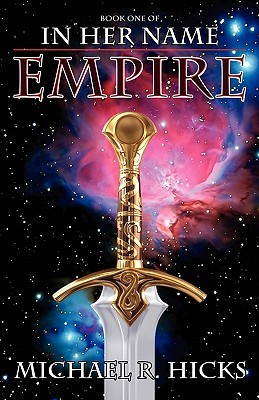
Empire(In Her Name:Redemption) by Michael Hicks
I received this book free and what a bargain. This book reminded me of C.J. Cherryh's Faded Sun series. Mix that with James Clavell's Shogun (I have only seen the mini series- not read book). And an eerie shades of William Golding's Lord of the Flies.
We first meet Reza as a seven year old whose parents are fighting a deadly battle against the Kreelan's. The safe place where he had been was under attack and he came looking for his parents. He arrives in time to witness their death at the hand of a Kreelan priestess and he expects to die and strikes out with a knife slashing the Kreelan's face. Rather than killing him, the Kreelan uses her claw to mark his face in an identical fashion.
A few year later Reza is at an orphanage on a world full of orphans. He's younger than some, but has become a leader of house 48 by force of character. Here we see the shades of Lord of the Flies when an evil warden, Muldoon, attempts to rape a new arrival,Nichol. Reza steps in and immediately all the other children gather round. It gets a bit tense before diffusing, but it looked as though these kids might be willing to do more than complain.
Reza seems to fall for Nichol though she seems to treat him like a brother. She is older and is able to soon leave the orphan world to join the military, much to Reza's joy and dismay. She leaves in time to escape the destruction of the planet, by the Kreelans. For a change, the Kreelans take captives of the children and Reza is almost disposed of, because he does not fall in the given criteria. Out of curiosity the priestess, Tesh-Dar, checks this captive slated for disposal and finds the scar, which matches her own scar. She chooses to include him into the experiment in which the Kreelans attempt to discern if the humans(animals) might have souls. (Soul is something they can feel between each other in the blood)
Taken to one of the Kreelan home-worlds Reza is treated like a pet housed and fed and eventually trained in the Kreelan Way by Esah-Zhurah. He eventually will be the only of the experiment who survives, perhaps because his will and determination match Esah-Zurah's. Predictably this animosity between them will eventually lead to their growing close.
There is an enormous amount of world building packed into this book. And though it seems strange and alien that the Kreelan's can have such advanced technology and yet seem so savage at times, it is a good thing in that we are, after all, talking about aliens. Though it almost seems that parts of the story are slow and ponderous, it does give one the illusion of the time needed to pass for many of Reza's values and attitude to change realistically.
There are predictable elements, but still a lot of surprises and though things often come close to what I suspect; they often suddenly veer off in a different direction that logically fits the plot and the characters.
It almost becomes a story that could be as tragic as Romeo and Juliet.
After concluding the story I purchased the two other books that follow, and will definitely make time to read them.
Every science fiction and fantasy reader should find something good to take out of this book. I'm expecting a lot out of the next two books.
J.L. Dobias

Spots the Space Marine by M.C.A. Hogarth
Is a delicious science fiction tale. Written in a somewhat play or screen play style that can put off many an average reader. For those who can tough it through, its beyond well worth reading. Though the story is told mostly through dialogue M.C.A has a way of crafting her characters through that dialogue. It's a bit more work for the reader and seemed to slow my usual pace down quite a bit, but it's worth the effort.
I would not have looked at this book had there not been controversy about it. It seems the use of Space Marines is being sanctioned by another party.
I find it hard to believe when I see the following information show up.
http://en.wikipedia.org/wiki/Space_marines :: has an interesting chart showing the dates and types of usage of space marines dating as far back as 1932
"Misfit by Robert A. Heinlein 1939 (uses term Space Marines)
Lensman series by E. E. Smith's 1938-1940(uses term Space Marines)
Captain Brink of the Space Marines by Bob Olsen 1936 amazing stories
Waitabits by E.F.Russel in astonishing sf 1955 (uses term Space Marines)
Space Marines (Space Opera RPG) by A. Mark Ratner (1980)
In movies as early as 1973(use term Space Marines)
In games as early as 1977 (use term Space Marines)
The United States Space Marine Corps by Eugene R. Hudson. 2011
This book is not a game or not about games nor related to said game and even if said game has an armload of novels at a certain bookseller, that still shouldn't give them the right to contest two words that show up in a cover that has more than those two words.
That much said::
Spots aka Magda Guitart is the seemingly unlikely hero of the story. As it unfolds we find that she's a wife and mother who has been at a desk job for a number of years. When she's deployed into a conflict zone, this doesn't sound good or hold well with her unit members and just about all except for Claws aka Travis Walker treat her with a measure of contempt. She comes off in initial description as someone who might be a little soft in the middle.
The reader begins to wonder how she managed to get shipped out to a remote asteroid where there's a deadly game being played with the enemy. As the reader learns more about the enemy through the dialogue and stage directions and the ensuing battles the stories of the characters are also quite cleverly played out. This seems to me a difficult task using mostly dialogue but M.C.A. pulls it off in what might seem like an effortless fashion.
The reader soon learns more of Spots as they are drawn into her character with a lot of respect for her. The reader soon begins to wonder when Spots unit team-members will start to see the light. There's a lot more to this kick-ass woman than meets the eyes.
This is all cleverly played out as the reader gets the impression that everything the higher ups do lately has been nothing but trouble and disaster for the unit. It's not that difficult to see that they can't recognize that somehow someone has put the right person in the right place.
This is not just a story of how Spots grows and hardens up, it's also the story of how the team grows. There's a lot to get over and to get through including xenophobia towards their alien adviser. And there will be casualties.
This story is so rich with character development and intriguing plot that it's enough to keep you riveted to the seat for a while. I'm sure that it's for the most part my own reading habits that made this such a long read. For me every sentence of dialogue counted and had to be digested carefully.
Even after a longer than normal time reading I was left hungry for more of Spot's, Sam's and Claw's stories. I found this to be much better than Starship Troopers.
Spots is an excellent, strong and well developed female character.
J.L. Dobias

The Chaos Chronicles(1-3) by Jeffery A. Carver
I've got to admit that I really enjoyed the first book of this trilogy Neptune Crossing which I received free from the author's website. So I purchased the Trilogy and it did not disappoint me.
In the first book the reader is introduced to John Bandicut who is some sort of Neuro-link jockey who controls ships and other devices through a direct link to his brain. We discover as it goes that his link was damaged and then further damaged by faulty nano-surgery and he now can no longer link and suffers from occasional withdrawal bouts that he refers to as silence fugue. He's been relegated to part of a survey team on the moon Triton. His employer is searching for alien artifacts which have been detected and not yet located. Because of his fugue he is being watched and considered somewhat unreliable by some of the staff.
We also learn that John's motivation for being where he is; is in part due to his using a portion of his income to help support his orphaned niece,Dakota.
As we come into the story we find John wandering away from his designated search area and stumbling across an alien artifact after falling through thin ice. Almost trapped below the ice he finds a device called the Translator and he's somehow been inflicted with the presence of an alien called the Quarx who seems to have taken up residence in his head. He also discovers he may not have wandered as much as the artifact called him through the broken link.
Johns life is just starting to get interesting. Through these two alien influence he learns of the Chaos theory and how a somewhat nondescript alien race has sent the Translator out to assist sentient beings who they feel are in danger of extinction by way of the culmination of random chaotic events- which they've somehow been able to determine. They've enlisted John to help prevent the possible destruction of Earth and all of mankind. The problem is that they don't want John to tell anyone because there is not enough time for people to examine John to determine he's not gone crazy. And they also don't want the Translator left in the hands of the other humans.
Throughout the story John has to deal with the higher ups who feel he may be unreliable since the accident with his link. He also has a number of friends who help him out. One friend Georgia, introduces him to Julie whom he would really like to get to know better. This becomes difficult because Julie is with exoarch and would really love to know about the alien artifact he's hiding. John would really love to use that to help get closer to her too.
The alien in his head , Quarx is another troubling matter. It seems this alien has a limited life span but manages to spawn an offspring or replacement after dying. Each Quarx is a different personality and almost comes off as some multiple personality disorder more than new creations. Either way they stick with John and some are helpful others grudgingly helpful and others downright xenophobic, while some border on being voyeuristic.
John must in the end chose to go on his secret mission alone but with the assistance of the daughter-stones that come out of the Translator. There are three stones each with a special function meant to be useful in completing the mission.
In the long run John becomes a fugitive from justice suspected of having gone mad while he at best will become an unsung hero if he in fact saves the entire race and planet Earth. All of this while trying to get the girl. All of this is at risk because the Chaos analysis might prove to not be quite so accurate and there might not even be a threat.
This story does have the usual hard science element that Jeffery Carvers other novels have, it also include those element with the alien artifact and the Quarx and the stones that all seem more close to magic. But, these are there to help build the world that will continue into the other two books. As they stand they follow a close set of rules that help keep the story driving along and make them believable for the story.
I'd recommend these stories to everyone who like any type of science fiction with the caveat that this is a series of books and that means that not all of the plot elements are totally resolved because it's meant to keep you interested in finding out what will happen next.
That's why I recommend the trilogy because you will want to know what is going to happen next and get some more reveal about the aliens who sent out the Translator.
J.L. Dobias

I don't care what everyone else says-I enjoyed this book
Sunrise Alley by Catherine Asaro
I picked this book up in the kindle version- probably from the publisher-I don't see it here on Amazon. I'm familiar with Catherine Asaro and had not yet read any of her novels.
This novel reminded me of some of Heinlein's middle years - you know after the juvenile and after stranger in a strange and before the really wild stuff he wrote near the end. This is more on par with Friday. Except that the female character in Sunrise Alley has more depth.
Samantha Bryton is a rich intelligent woman who, after having suffered the loss of her father and her husband, has become a bit of a recluse. In the year 2033 where everyone is connected by what they refer to as the local mesh, Sam is trying to shed most of technology. This is a difficult thing for her since she's a leading figure in the development of EI Intelligence and EI Psychology. To say nothing of the basement lab she has in her seclude home.
We find Sam on a secluded beach near her home after a storm jogging and checking out storm damage while remaining as disconnected as she can from the mesh. She discovers first a shipwreck and then the man who calls himself Turner. It takes Sam a while and much conversation before she discovers that Turner is and EI - sentient machine that's been hybrid into a deceased human.
One quibble right away might be that this story early on takes the shape of a slightly contrived plot.
Here we have Turner an EI who, though he died and someone named Charon has altered his brain with an EI, claims he is still Turner Pascal the human.
Since Sam has been a staunch supporter of the notion that EI intelligent machines are sentient and should be accorded the same rights as people this seems all too convenient.
But the contrived nature of this story is also a plot point so it works as it is.
There are a number of twists and turns in the plot and plenty of thrills and danger to match many Hitchcock suspense films. There are some places where are hero's get into tight spots and squeak out of them rather conveniently - again a plot device and that becomes clear soon enough. What isn't clear is the why and that keeps the story going.
The evil character of Charon is shrouded in mystery and there are some twists and turns here but there are plenty of clues about this to make any final reveals work well.
It was an easy read for me-one sitting- and anyone who enjoys science fiction, suspense and even romance will find plenty to keep them involved.
J.L. Dobias

The Door Through Space by Marion Zimmer Bradley
I read this; because it was there. Well, it's written by Marion Zimmer Bradley and its one of the first novels of her's that was published. I loved The Colors of Space but honestly did not read much more than that because her stories seemed predominantly fantasy and at the time I was reading science fiction.
I'm almost sorry I haven't read more of her's- the good thing is that enough is out there I might still have time.
The Door Through Space demonstrates that she had a lot of talent coming out of the gate.
The story starts on the planet known as Wolf. The reader is introduced to Race Cargill former intelligence agent of the Terran Secret Service. He's at the spaceport in Kharsa and in the first chapter we are introduced to the natives much of the political situation and some of the back-story of Cargill all through the movement of a mob chasing a dwarf who appears to be peddling toys. And the reader is introduced to a mystery when the dwarf disappears while Cargill is trying to calm the natives, using his skill at speaking in their language. All of this is in the first short chapter.
Cargill is intent on leaving Wolf on the next Star-ship. He's ready to go and on the ship waiting when he's pulled off by his employer who has one more job for him. This job involves a traitor named Rakhal. Rakhal had been a fellow agent. When he turned native he left with Race's sister Juli and he disfigured Race's face. Race has since been at a desk job and he has no desire or ambition to seek after Rakhal or to kill his own brother in law. The problem is that Juli has come back and she's desperate to have Race find Rakhal and bring back her own daughter to her.
If that's not enough Race finds out that Rakhal has been pursuing the possibility that someone on Wolf might possess a matter transmitter. If that's true then Terran Intelligence needs to be on top of it.
One more time Race Cargill must go undercover to find his niece and try to secure the matter transmitter.
This is a tightly written tale that has survived the test of time and still stands as an intriguing story that keeps the reader on their toes and involved to the very end.
I sure hope Amazon has that download fixed. If not Guttenburg has this in kindle format and its easy to upload it from a pc into your que- I believe that's how I did it.
J.L. Dobias

Containment by Christian Cantrell
I loved this book and the character of Arik and it would be nice to give it five stars, but that would be lacking honesty.
This is good hard science fiction about a group of settlers on the planet Venus. As such, it is necessary to draw the proper picture of why we are there and how we got there and how we survive there so much of this hard science has to be there to support that. Some of the science seems questionable to me but that's only because I didn't stop to look things up to verify them and I'm just not an expert in many of those fields.
Often the hard science of Containment seems to come at the reader from a distance with detachment. Other times there are moments when Arik resonates with the science. There are long paragraphs about the harshness of the planet and life in the biosphere that contrast to the Arik's feelings because he expresses a few times how he's comfortable within the biosphere that he must live. The exposition often draws on the harshness of the planet almost as though we are portraying the planet as another character, and that didn't work that well with me because I didn't see the plot developing in that direction.
There also seems to be two stories happening. The present and some flashbacks. Again it's necessary, but at times it's confusing.
I had this one curious problem, Containment caused what I refer to in my antiquated thinking as the vinyl record skip syndrome. It's like having that scratch on the record where the needle skips and you have no idea how much you just missed. That's where I'm reading along and stumble into exposition and then suddenly reach the bottom of a page that I can't remember reading. It's a bad habit of mine and I believe many other readers might have something similar. I know to catch it because, as is the case with Containment, the parts I nearly napped through have some plot points that I need to know.
Containment qualifies as a hard science science fiction. The problem with that is that in trying so hard to do this many times hard science becomes hard to read. If the goal is to deliberately alienate readers who hate walls of exposition then it's likely to be successful at that. Most readers will accept a few of those when they clearly drive the plot. But, when a few of them seem to be there just to increase the hard science quotient, some readers end up skipping the important ones later. And, although I can point out many occasions where the exposition does drive the plot forward; for each of those there always two that are questionable.
I would never ask a writer to give up their babies, especially when they are doing hard science because it does tend to create some lovely images. The problem is that they often serve as a match for the dreaded purple prose that other creative writers get noted for. Neither of these are bad, But out of necessity they should drive the plot or character development and serve a purpose that the reader can identify.
Over all Containment is one of those curious books that everyone who loves science fiction might like, but it will always have a variety of reactions from love to mild acceptance to confusion.
Obviously many people do love it, and although it's possible one more good edit might have made those numbers rise, it's just as likely to make it worse. By the numbers (reader response) I can't say that the author made any large mistake in leaving it as it is. It might be a tough read for one out of four readers, but overall it's a tightly written and entertaining read.
J.L.Dobias

The Colors of Space By Marion Zimmer Bradley
I remember reading this a long time ago. Some time after the 1963 edition was published. I decided to read it again and see if it still stood well against time.
Bart Steele is a young Vegan who has come to Earth to study at the academy. He is a product of a human and Mentorian pair, although he lost his mother, the Mentorian, early in his life. His father owns a space shipping business that struggles as it must against the monopoly that the Lhari race has over interstellar flight. The Lhari have made it clear that only Lhari can survive while the warp-drive is active and that all other races must go into cold-sleep.
This monopoly causes Bart and many others to have a prejudice against the Lhari.
On graduation Bart is to meet his father at the Lhari spaceport where he will return home. Bart will never see his father again and will be catapulted into a universe of danger and intrigue. He discovers that his father and several others have died while trying to obtain the secrets of the Lhari and of the warp-drive. Bart is thrust into his father's world while he's become a fugitive from Lhari authorities.
The Lhari are not able to perceive colors the way humans and Mentorians do and this becomes a major plot device or I should say part of several plot devices. This is the only part that my more mature insight has quibbles about during this read. There are some big things that are hinged on this color disability that might not work quite as well as I once believed. One major one is that the Lhari could not tell something was red hot because they couldn't see the red. Since often survival hinges on such things there would likely have been another way for them to discern that a surface they were working on in their ship might be hot.
Most everything else in the story seems to stand the test of time and still seems to work quite well to move the plot along. Since not enough is revealed about how a specific disguise is worked out, it might seem a bit thin but it still works here.
The story itself beyond being science fiction seems to contain a mix of moral elements as regards prejudices and race hate. It becomes a story of a young mans journey to grow to maturity in his thinking and his beliefs.
J.L.Dobias

She By Henry Rider Haggard.
I suppose were I a scholar of those languages the formatting might be a problem.
This is a great book and a great classic and I suppose if I understood even a shred of Egyptian, Greek or Latin then I might be just as incensed as some others about the butchery of those parts of the book.
As it is I thoroughly enjoyed the story and hope that there are not any plot points that are of great import in all that hashed up gobble-de-gook.
I read She because I had read Atlantida by Pierre Benoit which someone had said was a major rip from She.
So to begin I would like to say that Atlantida doesn't come anywhere close to being the intense classic that She is and to make such a claim actually denigrates the work of Henry Ride Haggard. Whatever Atlantida as it is considerably different and so much less in content that any notion that its a copy deserves only a shrug.
She,Ayesha, is liken to an old Trope in history and mythology and literature. Amongst Aphrodite, Helen of Troy, Cleopatra, and Nefertiti-She takes her place. Women known for great beauty and seductive nature whom men will throw down kingdoms and fortunes to their very deaths, to stand beside.
It would seem to some that She of H.R.Haggard is considered the template for further lost world sub-genre. It may be so, although I would argue that it was a new template using an ancient trope.
What's interesting about She is that there are mountains of exposition from one central character, Ayesha, that not only tell the story of her long life but give insight into her philosophy and her ideals about religion. Not only do her arguments twist and sway the narrator but he is also enthralled by her beauty and presence and has perhaps lost a portion of his ability to argue rationally.
The narrator Holly is not a handsome man. He in fact is liken to a Baboon. But the orphan whom he has raised from childhood, Leo, perhaps has a handsomeness that could almost rival the beauty of She.
Of course this wouldn't be a story without the back-story of the family line of Leo. A back-story that may fatefully link Leo to Ayesha.
The story is written in that high and almost florid manner of it's time and might weigh heavy on the readers of this age but I think it still stands well through time with a multilevel examination of several moral and ethical dilemma. Though it often seems that the narrator goes purple the writing is strong and indicative of the writing of the time and the story does not suffer.
J.L.Dobias

Atlantida by Pierre Benoit
Even though this is a bit of a classic I enjoyed reading it.
It reminded me of those old Tarzan movies.
What it is though is more of an example of the old Trope about the beautiful, seductive, feminine character whom the protagonists all fall in love with.
It seems there was once some argument that Pierre plagiarized this from H.R. Haggard's SHE.
Though it does use the same template for lost world and has Africa as a setting and a lovely irresistible woman as the centerpiece the similarities end there.
Where She, Alesha, the centerpiece of H.R. Haggards story is an almost tragic woman trapped in her own tragic love story, the centerpiece of Alantida, Antinea, is more of a sinister siren that would be a complete opposite to Alesha.
Alantida seems in many ways much more short on being an examination of morals and ethics as She is.
It's still an interesting read but as I mentioned it reads more like some of the movies I have seen long ago where the players are under the influence of an obvious though hideously seductive evil.
I would recommend this to anyone who has read SHE and I'd recommend to anyone who reads this and hasn't read SHE to do so.
J.L.Dobias

And All the Stars by Andrea K Host.
I first had a taste of this novel in a sample; before discovering that it hadn't been released. In the bit of the beginning that I was able to read, I was hooked. I don't read a lot of apocalyptic novels or dystopian novels. I can't say with great knowledge that this contains no dystopia, but in my meager knowledge it didn't seem so much. I was drawn into the story by the great writing and story telling. It certainly wasn't the claustrophobic description or the ever-present feeling of being choked by some strange and possibly alien dust.The slow but persistent buildup of the character, Madeleine's, suspicion that she's at ground zero of a possible bio weapon. The eventual realization that she's all alone and that those around her who aren't dead are locked up in any type of safe containment that they could find. No one is going to offer to let her, and the strange dust that's choking her, into their safety.
Some of the earlier pages are difficult to get through for some people-someone I know put it down very early and it's too bad they did. There are some very important plot points in those pages. So, it's important and it does help drive the story and the character. Madeleine has survived the worst of the catastrophe with some injury and is confused and afraid.
Madeleine is your average rebellious teen who seems to be a bit of a loner. She's immersed herself in her art and wants to gain honor in that field at a young age. To that end she's skipped school and gone into the big city for a chance to paint a portrait of her famous cousin Tyler.
Now she's face to face with that very place that parents always warn their teens about and it could be her most fatal move in her rebellion. In her early wandering she contacts her parents and continues to lie about where she is to keep them from worrying.
There is a great sense that Madeleine is already dead. She's just been given a temporary reprieve and it's not yet clear if that's a good thing or a bad thing. Madeleine eventually makes it to her cousins apartment. Her cousin is gone and she's able to get in. She cleans up and while trying to avoid facing the inevitability of her death, she decides that her last act should be the portrait of her cousin even though it won't be possible to have him pose live.
For me this was a very interesting type of character development. The author,Andrea, builds a believable portrait of how an artist feels and sees things while choosing what eventually ends up on the canvas. We see this development quite a number of times throughout the story. Enough for the reader to wonder if Andrea is applying how she writes to how an artist might be inspired or if, in fact, it's from her own experience with sketching and painting.
Eventually our Character, Madeleine, starts experiencing the side effects of the dust. They are both strange and unsettling, and there is always the fear that she might die. All the time she's monitoring broadcasts about others who are affected, and many of those have died. I found no problem with the notion that much of technology was still active; even after establishing that this is an invasion. In fact it made sense that since this was happening everywhere that it would be more demoralizing to have a constant feed of information telling everyone how bleak things were.
Eventually the side affect that causes Madeleine to have an insatiable appetite is what brings her out to brave the city and seek sustenance. This is when she begins to meet more people and make friends in a way she would never have done if things were normal. This is when the story really takes off.
I found the pacing in this novel to be quite tight. I'm not a fan of seat of your pants action from cover to cover and there were plenty of well place lulls in the narrative that make perfect sense as far as plot and character development. It did seem a bit longer than 205 pages in the e-book, but when I love the characters I love more pages because I usually don't want to say goodbye so quickly once I get to know them.
As has been noted by other reviewers; there are plenty of plot twists in the story to keep the reader guessing. I often catch these in most novels, usually before they are -on the next page. There is one in here though that caught me unaware- the twist makes perfect sense- and you want to kick yourself and few other people when it happens.
Young, old- whatever genre- I think everyone will love this book.(Except perhaps those who are genuinely claustrophobic; as is someone I know.) Trust me. Once you get past that first bit of suffocating but possibly accurate description (I've never been in that situation so I don't know.) things will be easier to take.
J.L. Dobias

