Monday, May 11, 2015

Review::Odd John by Olaf Stapledon

Odd JohnOdd John by Olaf Stapledon

My rating: 5 of 5 stars


Odd John by Olaf Stapledon

This is my third offering in super human or Ubermensch. These three seem to point to a theme that’s a keystones to later works. The first was The Hampdenshire Wonder by J.D. Beresford and this is actually the second chronologically and the third was Theodore Sturgeon's More Than Human. All three stick with me as three that I encountered in my early reading history. If I were to add more to this I'd add Mary Shelly's Frankenstein which might at least account for a trend that the other three books take.

I read all three when I was in my teens and I think that the negative outlook of Odd John and The Wonder left me at a place where I avoided rereading them. More Than Human has the benefit of some small amount of hope that the Ubermensch might survive. All three still hold the tone set by Frankenstein; in that the super human would look much like a monster to us. To this end there is always some bit of mutation to the physical appearance and some lack of morality in the sense that whatever they might use for morality is something we can't understand.

J.D. Beresford's Wonder was someone who had no peer at the end of his life and he had a lack of a sense of wonder along with his own strange morality. In Odd John we see this at the beginning but John has a longer life and a better chance at coming to terms and perhaps at staving off the sense that there is nothing left to marvel at or be in awe of.

John's physical difficulties are mostly his slow aging process. And we all say, ‘How can that be bad?’ But John is born with an intellect that goes for beyond his age and with the slow growth easily out strips his physical appearance which is doomed to always be well behind his chronological age. At an early age he takes an interest in everything; but specifically politics, and its power and wealth. His physical problems may account for his interest in medicine. And of course he studies theology, philosophy and the sciences.

He eventually saturates and become disenchanted with everything he takes an interest in. He also is becoming aware that there is nothing in modern theology, philosophy and the science that helps explain what he is. Throughout all of this his one anchor is his mother who seems to have some telepathic connection to him and displays some level of understanding of him and his plight.

His eventual conclusion that he'd have to make his own search for others like himself and in turn uncover more about why he exists lead him down a dark path that begins to show the skewed moral sense that he was forming for himself. Once again being the super human with no peer to study and to guide him, John creates his own moral standard based somewhat on the simplest survival characteristics that all humans have. This comes to the forefront while in his teens, when he takes up with a police official named Smithson. He and Smithson become friends and through his usual precocious inquisitiveness John learns much about breaking the law. His intent is to rob from the rich and fund his quest. This works well until Smithson finds him in the act and John has to make a snap decision resulting in the death of his 'friend' Smithson at Johns hand: and knife.

Because the story is told from another friends Point of View this part is told in a frame story from some future time when John finally decides to confide in the narrator as to what was going on at that time in his life. It might not have come up had that friend not thought to mention he had noticed a peculiar change in John at that time. The moral dilemma in this is that John admits that this was mostly a choice of his survival so that he could continue his plan to bring together others like himself in a community that would work for their own betterment. John had at some point given up any notion that they would be able to help present mankind whom he considered to be on the level of an animal such as a pet. This also is a common thread that runs through these types of stories.

This, when compared with the other stories of this nature, might leave the reader wondering if there were not some ingrained fear in man that, given evolution, there would eventually be a higher form of intelligence that might make present man look like a common animal. It seems ironic from there; that the fear is that the higher one would treat us like we treat our pets and then that that carried over to the notion of having a different moral sense that allows them to kill a man under the right circumstances. I had to stop and think about that; is this how we do treat or pets?

Where J.D. Beresford's wonder, Victor Stott, was doomed to be alone and in fact was plagued by another child who looked similar to him but did not have his gift; John has the power of telepathy and through it he finds others like himself and it becomes his life’s ambition to assemble them and found an island colony. Throughout he uses the narrator as his front man for inventions he creates and sells and makes both of them rich. This gives him a great power over the narrator and sometimes it sounds like John abuses him; while at the same time he values the man enough to know that he needs to let him live a somewhat normal life. This probably gives the reader a better picture of John than we have of Victor and the Gestalt of characters in More Than Human.

I think that the Ubermensch in this novel have something that is better than that of J.D. Beresford's Wonder and that is that they never lose that sense of wonder. Yet what makes this particularly dissatisfying is that once again there is no room for both normal man and the super man and a decision has to be made. It's interesting what that decision finally is.

If I have any qualms about this novel it would be the large sections of expository writing that begins to dominate as soon as John reaches that age and stage where he is giving up on mankind. I'd be inclined to believe that he was beginning to reflect the views of Olaf Stapledon; what with the long-windedness of the dissertations.

If you are interested in reading this I'd suggest finding a paper copy. My paper copy from long ago wandered off -long ago; so I used the online e-book, which I think comes from the same source as some gutenburg text that probably was scanned in and only lightly edited. There are numerous obvious problems and some not so obvious that come of that and unless you are a forgiving reader I'd suggest again, find a paper edition.

Theodore Sturgeon's More Than Human comes long after this; yet he uses the same notion of telepathy and a few other evident powers shown in this book. He continues the discussion on morality and how that might differ for the super human. What he does differently in the community of the superior’s, is that he makes them dependent upon each other to form an entire gestalt being.(The lesser parts are not so superior.)

This is a great SFF Classic that still stands well when considering the time it was written and is a novel that should be of great interest to those continuing the conversation about Homo Superior and what that looks like and how they might change or endanger the course of mankind.

J.L. Dobias


View all my reviews

Sunday, May 10, 2015

[Rock] : [Paper] : [Kindle (Computer)]

[Rock] : [Paper] : [Kindle (Computer)]

It's that old game: rock; paper; scissors. Which beats which? Of course you might have to establish whether you’re talking about reading or writing. I might go into which is best to read some time later; but for now I want to look at how writing has changed. Notice how I didn't say improved.

I was reading about someone’s experience; they spoke about the advice that the speed of creativity in writing with the pencil or pen and notebook are things that go hand in hand; and that this advice worked for them. I think this type of advice is something that's more personal preference than universal truth. I won't even go into the argument that writing the creative content in your head is the most efficient: and saves trees. Writing onto media puts down into words what's rattling around in someone’s head in a form that might be readily available to the author and perhaps shared with colleagues. Throughout history the media has changed. The purpose might range from fear of forgetting something before they get it down or it might be viewed as a way of preserving information over long periods of time to be used by others. We’ve been doing this since near the dawn of time.

Long ago we used rock. Rock lasts longer most of the time and God wrote on rock with his fingers so there is no shame in using rock unless you're pretending to be God. It's murder on the finger. Then there was the quill and parchment of which parchment didn't last as long as rock and I'm sure there was some discussion about which was faster though not much really, because CNC machines would not be invented for quite some time; otherwise rock would still be in favor. Switching to quill had its advantages: such as, if you ran out of ink there was always blood. But for dissemination of work over a wide area either paper or rock required a lot of time with many hands to make a few copies. Then come printing presses, which were great for wide distribution; but for utility and speed it was easier to drag around, pen and paper.

Then we have the lighter weight typewriter. Nimble fingers and typewriters and precision typing skills would argue that the typewriter was faster than paper and quill and much faster than scratching on a rock. But they were heavy, cumbersome, and awkward;until there were light weight portables and electric typewriters, the market for quill and paper still existed for anyone constantly on the go. And then even the light weight portable typewriters were not as easy to carry as a pen and notebook.

The next big step is the computer. The first one of those was about as portable as a printing press and even the first laptop was a bit heavy though you didn't have to carry a ream of paper; as you would with a typewriter. Now with the tablets and phone apps it’s like having the notebook and pencil or pen and yet saving all the paper, ink, and graphite.

But which is faster for the writer? That was the question.

There's a possibility that most writers don't fall in that highly skilled department when it comes to typing skills. Perhaps hunt and peck or using one of those insanely small keyboards on a phone might add time to the equation. So does that make pen and paper faster?

Not for me.

In fact, using pen and paper has always been counter intuitive for someone like me. My handwriting is atrocious; so much so that I used to use a non electric smith corona for everything. Trying to sort through my notes done by hand are similar to deciphering a strange language etched on a rock. You can call it laziness that my penmanship is poor; and a lot of people did and still do. But the bottom line is that the best method for me to use, for written word, is the computer. As for computers: first drafts, for me; I leave the auto spell checker on, to save me from having to backtrack. Since I know I'll redo everything at least five times before I give it to anyone else, this works despite the insistence of the spell checker to incorrectly alter simple words on the fly. All other edits are with spell checker off.

Does this put me to a disadvantage and slow me down when creating? My hand, my pencil, my pen, my paper, my keyboard and my computer don't think. I do that and the only thing that slows me down is the thinking. When I put it all on paper or in electronic form it takes about the same amount of time and except for my poor handwriting, none of those other pieces of the puzzle seem to be any better than the next, in creating a page from my thoughts. But when my heart gets into it, everything begins to flow out and all I worry about is not having anything at all to put it onto before it starts to fade away like last nights dreams.

So I will take what's available at the moment, paper-and-pen or computer, with the caveat that if its pen and paper some parts might get lost in translation.

As for rocks: the neighbors are happy they took those away from me, because finding them in the living-room amidst all the broken glass was getting annoying.

J.L. Dobias

Friday, May 8, 2015

Review::More Than Human by Theodore Sturgeon

More Than HumanMore Than Human by Theodore Sturgeon

My rating: 5 of 5 stars


More Than Human by Theodore Sturgeon

This is another of those I read a long time ago and perhaps as much as five years ago someone suggested it as a book that had largely influenced them. I hardly recall it and can only attribute that to the fact I read it over 40 years ago. In rereading it I found some parts of it seemed somewhat disjointed; though maybe just jarred a bit by the change in names for major characters. This might have contributed to my earlier lack recollections of the whole.

Since the novel is three novellas; two of which were written as a sort of sandwich on either side of the original piece 'Baby is Three', that might explain the disjointed feel.

The first part 'The Fabulous Idiot' brings to mind another book I recently read, The Hampdenshire Wonder by J.D. Beresford. The idiot is a 25 year old male who calls himself Lone, who is a street person; because of the telepathic ability he has he is under educated and isolated from others and living well below his potential. This part has another fabulous idiot in the guise of an over protective father who has two daughters. The older daughter has the benefit of having had her mother raise her until the younger was born and at birth the mother died. The insane father has tried to raise both girls in isolation and discourages any close physical contact between them and anyone else. This creates a strange innocence in the youngest, Evelyn; which seems to make her susceptible to Lone’s telepathy, when they manage to stumble across each other. The father eventually finds them together and he beats them both before he ends up killing himself.

After this incident and Lone's long recovery, he isolates himself once more until he meets Janie, a telekinetic, and her two friends Bonnie and Beanie, the teleporters. Eventually they adopt a mongoloid baby who makes the fifth of their curious Gestalt. At this point they are capable of wondrous things; but what Lone does is try to help a friend on his farm by using standard off the shelf parts to create anti-gravity. This is installed on his farmer friends truck just prior to Lone's discovery that his friend has abandoned the farm.

Also of note in this section is the introduction of two other characters Gerry Thompson and Hip Barrows. Gerry is an orphan and Hip is the son of a doctor. Both seem to be gifted.

The Second Part 'Baby is Three' is the original novella that reads like a mystery. Gerry is at a psychiatrists office and is negotiating for therapy with a sizable amount of cash. Based on the previous novella the cash is a big mystery; but considering this from a reader having only this story a larger mystery unfolds as the analysis begins.

Gerry meets Lone who takes him back to his cabin in the woods where he is introduced to the multi-talented Gestalt. Gerry's own talents are similar to Lone's ; but it takes some time to determine this. The real initial crisis of this story is that Lone has died and left specific instructions about what the Gestalt must do for it's continued existence. The larger crisis is that this stipulation has led to Gerry having murdered someone and this therapy is mostly about getting to the center of that.

Yet as the whole unfolds, the real focus is on the way that the Gestalt of five people are so different from the human parts that there is nothing to compare it to and no real reason to believe that all the socio-psychological behavioral patterns of normal humans should regulate them. And possibly when in the Gestalt they have no fair concept of some of the restrictions that regulate humans. No moral compass.


The third story is 'Morality'; taking up after 'Baby is Three' with the notion that the Gestalt is missing something and Hip Barrows shows up as the target of a superhuman being that has no moral compass. This story returns us also to the notion of the Anti-Gravity device that was previously left installed on a truck in the center of an abandoned farm.

This is a great SFF classic that examines once again the notion of evolution and the possibility of a superman. Unlike 'The Hampdenshire Wonder by J.D. Beresford', which is from an outside point of view the reader gets a close up picture of the inner workings of the minds of these characters and that might add to some of the disjointed feel within the story. Where J.D Beresford gives us a rather dark picture and outcome Sturgeon is somewhat more optimistic.

J.L. Dobias


View all my reviews

Thursday, May 7, 2015

Review::Endurance by S.L. Viehl

Endurance (Stardoc, #3)Endurance by S.L. Viehl

My rating: 4 of 5 stars


Endurance (A Stardoc Novel)by S.L. Viehl

This is the third offering in the Stardoc Novels and would round out a nice trilogy for those who need to take a break in reading before venturing into the remaining seven. Personally I'd recommend the reader to read the forth book; because some of the major questions that have been lurking in the first three will finally be answered. But probably not all questions.

In the previous book Beyond Varallan our hero Cherijo is stuck between a rock and a hard place and decides the only way to get out of it is to use her connection to the Hsktskt-piratical slavers-to turn the table and pretty much send a whole fleet into slavery. This does not endear her to her own fellows and since she's discovered that almost everyone close to her has betrayed her she's at the furthest end of her rope, while trying to run the slaver's hospital and keep the slaves in good order so they can be sold out to slavery.

This is a novel that digs the furthest into that dark spot where I've defined her relationships as being Schizoid in nature. Despite the torture and near death experiences rife within the story there is still time for romance and Cherijo again finds herself torn between lovers and being pursued by more of those than she cares.

Once again the reader delves into the strange nature of the aliens within this series; but ever more strange is the man known as Reever who is the most perplexing of characters in the series. Yet more perplexing is that Cherijo has such a problem pulling herself away from this horrible person. Even though there might be some justification in Reever's attitude in this story there is a huge stretch of the reader's patience with Cherijo throughout the story. This all works out, somehow, but it becomes quite thin right up to the end.

Lots of surprises in this one and more back-story to take us to the forth novel

Great and Strange SFF for the Fans who like both the Star Wars and Star Trek fiction franchise that is out there. A bit of a stretch often for the purists in SF, but if you do give it a try, you need to read the first four almost as one book to get the full picture of things. Maybe even eventually understand how Cherijo can end up so messed up.

J.L. Dobias


View all my reviews

Wednesday, May 6, 2015

Review::The Hampdenshire Wonder by J.D. Beresford

The Hampdenshire WonderThe Hampdenshire Wonder by J.D. Beresford

My rating: 5 of 5 stars


The Wonder (The Hampdenshire Wonder)by J.D. Beresford

This is billed as Science Fiction and it is; but the reader is required to endure 50 pages of build up to get to it. Not that that's entirely bad, because the writing is fairly engaging; it's just that sometimes it becomes questionable where the whole thing is heading. There is a sort of feel similar to some Mark Twain story telling that left me looking for the humorous turn of events coming up around the bend. But this is more of a serious piece; once you get past the 25% mark.

There is some justification for the long lead-in. The first is to introduce us to the narrator who first sees Victor Stott, as a very remarkable child, on a train. We then digress to the story of Ginger Stott, Victor's father, and his story. The idea, I suppose, is to start with a national pastime, Cricket in this case, and create the character of Ginger: a self taught Cricket prodigy. When a tragic injury takes Ginger out of the game, he tries to train other players; but finds that they all have formed bad habits and are not trainable to his methods. He decides that the only way to train anyone would be to keep them isolated from the game until they were a teen and then train them from the place of having no previously formed habits.

This leads to Ginger getting married. This happens in much of a manner that looks like-Ellen Mary Jakes, a long time spinster, finds out about Gingers plans and offers herself; to which he responds, "Well! I dunno why not". This union results in one offspring when Ellen who is near her fifties gives birth to a possibly hydrocephalic boy. The boy, Victor, is not expected to live; but surprises everyone. Though he lives; Victory will not carry on the family Cricket legacy. Victor's large head seems to be there to house his higher intellect, because he turns out to be a prodigy in his own way; though this will be difficult to determine, because he hardly ever speaks.

Though in part this story delivers a message about what life might be like for someone who can't have that sense of awe (wonder) that we all have from the world around us and all the marvels of science and philosophy, it is also a window into problems with education; that continue to plague us to this day.

It becomes clear early that at age three or four Victor can absorb all the information from the dictionary, the encyclopedia, the bible and a whole library of books; and that the present education system is geared to drag him down because it's made to accommodate a rather average intellect. That doesn't even account for his rather strange social skills, or what looks like a lack of social skills.

Because the story is told from a viewpoint outside of the prodigy, which makes some sense because one wonders what the inside of the prodigies thought process might look like; it gives the reader a story that seems to revolve around and about the reaction to the prodigy rather than any notion about how the prodigy must feel about things. That leads to our narrator using other people’s thoughts and feelings to try to come up with a picture of what it must be like for the prodigy.

Once you read this you will see that the title of The Wonder or The Hampdenshire Wonder can almost have two meanings and that adds just the right touch to the whole piece.

This is definitely for SFF lovers who don't mind watching the kettle boil or paint dry to get to the interesting parts. Still it does stick in the mind as one of the classics that set the pace for others to follow.

J.L. Dobias


View all my reviews

Tuesday, May 5, 2015

Review::Titans by Edward W. Robertson

TitansTitans by Edward W. Robertson

My rating: 4 of 5 stars


Titans by Edward W. Robertson

I picked up this book along with two others off of a suggestion for reading. Of the three this one was by far the most well rounded story. The story is told from the POV of a main character that has lived for over three thousand years. Living forever of course has its good points and then some few bad points, though I know a few people who might argue that it would be whiny to make a big deal about the bad points of this situation.

But there is one kicker, in that Robert Dunbar will only live forever if he can keep from being mortally wounded and that's a difficult task to undertake for so long. There is no guarantee he won’t spend a great portion of his life as a madman, with his long life driving him insane. Not to mention the tediousness of being placed into slavery.

If there were any qualms I might have with the story, it would be the sometimes somewhat banal language that comes from this man who has had three thousand years to develop a most acerbic attitude toward everything.

Robert is just trying to live his life quietly amongst those who have such a short life when he meets Baxter, a man who knows more about Robert than Robert feels is safe. So Robert’s first reaction is that he needs to kill Baxter. This results in both of them plunging toward death from a hi-rise apartment patio. But Baxter has a few tricks up his sleeve and saves them both. It turns out that Roberts new friend is an AI encased in an android body.

Apparently even to Roberts surprise the corporations of Earth have managed to create viable AIs; but they haven't been able to control them very well. The AI's are hiding in space and are concerned about the corporate movements to go further into space while creating a virtual slave labor force. They also are somewhat concerned about the corporations wanting to recapture the AIs, but the novel seems mostly focused on their attempt to negotiate for better circumstances for the future colonists. To that end they have enlisted Robert from whom they intend to tap great knowledge of history.

From there the story becomes doubly interesting as Robert recalls his past life and in some ways his qualifications to the job, while the narrative examines the current politics of the colonies that exist within the solar system. It's quite well written but I'm not a historian so I wouldn't be much use in trying to validate any of the history in the text, though it flows well and helps develop the character.

The theme of long life has some familiar elements that I've seen in other works of fiction, but the main characters insights and outlook are refreshingly different some times and keep the story moving along.

It's a thoroughly entertaining read that should capture the interest of most SFF fans with a small appeal to the historic fiction lovers. It also almost screams for some sort of sequel; so we'll have to wait and see.

J.L. Dobias


View all my reviews

Monday, May 4, 2015

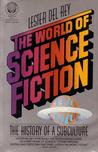
Review::The World of Science Fiction (The History of a Subculture)by Lester del Rey

The World of Science Fiction, 1926-76: The History of a SubcultureThe World of Science Fiction, 1926-76: The History of a Subculture by Lester del Rey

My rating: 5 of 5 stars


The World of Science Fiction by Lester del Rey

Though I would agree that this is not a good source of in-depth analysis of the writing of science fiction I think that it does do what it set out to do and expecting any more is truly expecting too much. The History of a Subculture does not imply that it means to analyze the books or the work of that history in great depth; and if it had the book would have had to have taken up much more room on the shelve by the time the ten volumes were finished.

This is a generalized history of the first fifty years of science fiction starting with the age of magazines and short stories. I highly recommend this book when I run across people bemoaning the fact that short stories have slipped in quality, because they seem to be abandoned by many of the authors that were the backbone of science fiction.

The close analysis and the author's own participation in much of the process lends to a comprehensive examination of what happened in the industry throughout that fifty years and how it gradually led to the acceptance of more novels in science fiction; which in fact did draw many authors away from the short story venue. But far from outright abandonment, this book helps detail many of the problems and struggles of the magazine industry to try to create a proper demand and retain that demand while the growing industry became a hydra-like creature that then falls upon itself like an Ouroborus. More than anything; the industry itself, with its ups and downs was the largest factor in losing the more skilled and prolific authors.

If I have one disappointment about this book it would be that it may have failed in recognizing some of the most prodigious works that stand out as milestones in the industry. In particular I can cite a novel that did not get a mention in this history. That novel was important enough that I felt the possibility exists that, because of the omission, even some pivotal short stories might have been missed. I might have let the novel slide if the whole work were devoted entirely to short stories; but the second half does go into detail concerning novels.

What was conspicuously missing was Philip K. Dick's The Man in the High Castle. This is a book that many say was Philip's greatest achievement and it even garnered a Hugo. Had this been mentioned only, though there were others that had brief summaries and sometimes a limited analysis, I would have been happy. But this wasn't even mentioned despite the mention of Philip K. Dick in the short story section. Because of that I realized there might be several other works by other short story writers that could bear mentioning and were passed up. I'm not sure why that is; but that still makes me wonder about whether all the more important short stories were covered, since short stories are not something I ever read in large amounts.

Still this book, despite that one misgiving, stands well as a window into the industry and the people (editors) who figured prominently in creating the consistent feel and encouraged writers to hone their writing skills. It also shows how in the boom times they had to deal with other less stringent publishers and editors who were trying to get a piece of the pie without the work. It carefully details how these late comers consistently destroyed themselves and often a few of the established magazines in the process before recovery was possible.

This book goes on the shelf right next to my two volumes Robert Heinlein biography.

This is a great reference piece that might even have a few good suggestions in reading for die hard SFF fans.

J.L. Dobias


View all my reviews

Sunday, May 3, 2015

Review::The Man In The High Castle by Philip K. Dick

The Man in the High CastleThe Man in the High Castle by Philip K. Dick

My rating: 5 of 5 stars


The Man in the High Castle by Philip K. Dick

I first read this when I was in my teens and it's been over 40 years since that time and this is the first time I've reread it. I've encountered a few critiques that have tried to explain it all and though I might seldom agree to all the assessments I have no intention of disputing them. I'm more inclined to do a review and perhaps tell a bit about what I liked.

I don't seem to have a clear recollection of the story from way back when; except the ending has been one thing that did stick in my mind.

The book is about an alternate reality where Japan and Germany won World War II. It is at least four stories that intersect and converge and diverge throughout the narrative. There is a fifth story that is more like a spin-off as the connection is mostly in the past while there might be a bit of synchronicity to what happens with that character in relationship to the rest: it is really a separate story.

The other stories are destined to converge.

There are several more characters; but I feel safe with four converging stories. One thing I found outstanding in this work is the meticulous detail to character development.

The first story is of Robert Childan who owns a well known shop that sells American antiquities to wealthy Japanese who have taken over rule of Eastern USA. He is soon to find that he may have some forgeries and this will dramatically change his life.

Nobusuke Tagomi is a customer of Robert's and is a minor functionary in the governmental structure; but his interaction with Mr. Baynes of Sweden, who is really Rudolf Wegener of Reich Naval Counter-intelligence: and Mr. Yatabi, who is really General Tedeki a former Imperial Cheif of Staff will begin his descent into a nightmare world.

The Baynes story-line seems important enough to mention as its own; but it mostly intersects with the Tagomi story. The rest is quite interesting character development.

Then we have Frank Frink who is really Frank Fink, a Jew, hiding out and working for a manufacturer who makes counterfeit antiquities, some of which have ended up in Robert Childan's hands. Frank has just lost his job even though the boss considers him one of the best at making the forgeries. Frank has an attitude problem that has one too many times put him at odds with his employer.

The seemingly side story is Franks ex-wife, Juliana, who has long ago left Frank and now seems to lead a somewhat pointless life, as a judo instructor. She takes up with Joe, an Italian truck driver who decides to divert himself long enough to seduce her. It all seems to be fun and games and he introduces her to the novel 'The Grasshopper Lies Heavy by Hawthorne Abensen' it’s a novel that is banned in most places. because it's about an alternate reality where Japan and Germany lost the war. Since Italy was allied with Germany it seems odd that Joe has this book; but there are more things than that making Juliana uncomfortable with Joe.

The Grasshopper Lies Heavy figures prominently throughout the book and even serves as a frame story in several places where the characters read extensive sections.

Frank is convinced by a fellow worker, Ed, to start his own business selling authentic jewelry with Ed, but his friends methods for getting things started will put them in danger and eventually lead to Frank's arrest; where the authorities determine he's a Jew. The business will be called Edfrank Custom Jewelers. (What's most significant throughout the story beyond this is the close examination of all the characters fears and prejudices. Frank finds himself displaying his own prejudice about the blacks when the news that the German Euthanize African blacks, reaches the media; but he quickly recognizes his own hypocrisy.) Their subterfuge leads to Robert Childan's discovery of the forgeries: in their attempt to send a message to their former employer who then pays them off; so they won't sour any more of his market, and that money is used to start the business.

Those events set off a roller-coaster ride of emotion for Robert Childan that manages to re-ignite his own prejudices against the Japanese. There seems to be a large discourse from him about how they don't ever come up with original thoughts and designs but are very good at copying things.(Ironic since Childan and his supplier are the ones operating with counterfeits.) Later Childan takes some of the Edfrank Jewelry on consignment, though he doesn't hold much hope for it. Reaction to the jewelry seems mixed at first; but it ultimately results in something positive for Robert, leading to his own strange awakening.

The reader gets large chunks of The Grasshoper Lies Heavy read to him by numerous characters. Surprisingly almost everyone has a copy despite it being banned. Ironically the first large chunk read is from Reiss, the Reich's Consul to the Japanese territory. It is midst the confusion of the death of the present German leader and Reiss's own ruminations about which of the worst choices will take his place that he attempts to read passages from the banned book; until he becomes disgusted and puts it down thinking that its only a book written by a fiction writer who must be quite gifted at writing. He recalls at that moment that one candidate to replace the leadership is Doctor Goebells; who also was once an author of fiction. The scene then moves to where they are receiving a copy of a speech being given(written) by Goebells(possibly about his taking power); which made this reader wonder if the implication was that Reiss would soon be reading another distasteful bit of fiction.

Tagomi touches twice on the events regarding Frank and Robert; once because he has purchased some items from Childan, one being a Colt Army revolver and later he will acquire a piece of EdFrank jewelry. His complications in life bring him to a crisis that leads to him experiencing some event related to the jewelry that places him momentarily in an alternate reality where Japan lost the war. This strange experience manages to center him; though things do not look well for him, Japan, and the mysterious Mr. Baynes.

During all of this we occasionally shift aside to the story of Joe and Juliana as they embark on a journey that will eventually lead to the Man in the High Castle, so that Juliana might ask the author of The Grasshopper Lies Heavy some questions about the book. Juliana proves to be a stronger character than Joe's narrow view allows him to see; and this will be to his detriment.

As is usual for Philip K. Dick, he embarks on a story that is an alternate future containing another story with an alternate future; which leaves the reader wondering what is reality.

I recently read ‘The world of Science Fiction by Lester Del Rey’. It's a book that goes from the beginning of science fiction magazines and short stories(1926) up until 1976 and mentions many of the major novels. This timeline contains the time that The Man in the High Castle was published. The author mentions Philip K. Dick as an important figure and this book, The Man in the High Castle is often considered Mr. Dick's finest work. Yet somehow ‘The world of Science Fiction by Lester Del Rey’ contains no reference to The Man in the High Castle.

Perhaps it would be presumptuous to conclude that the author excluded it because he felt it was more literary fiction than science fiction. It certainly strikes me that way; but in the same token as I read Mr. Del Rey's work I have to wonder, when examining his own words, just why this book was excluded even with that thin excuse.

J.L. Dobias


View all my reviews

Saturday, May 2, 2015

Review::Beyond Varallan by S.L. Viehl

Beyond Varallan (Stardoc, #2)Beyond Varallan by S.L. Viehl

My rating: 4 of 5 stars


Beyond Varallan(A Stardoc Novel)by S.L. Viehl

This is the second in a series of at least ten books; so far I've gotten to 4 and they have several things in common. One is that they are very close to the same size which is somewhere around 150K words and that's somewhat more than the normal for this type of novel but not too far out of the ball park. Another is that unfortunately the main character does not seem to me to change very much, though lots of things happen to her that should push her in new directions. Also her romances, possibly because of the nature of her existence, are rather strange and as I've said before they seem schizoid in nature.

In the first novel Cherijo escaped her father and Earth, a place that is deliberately prejudiced against aliens: and seems quite xenophobic. She escapes to a planet where the understanding of many aliens is that humans have a distasteful habit: they spit. This made it hard for her to integrate; and it became worse when she bonded with a Jorenian, a race who mate for life; and she became part of her partners clan before her partner died. From there it is evident that these stories become an ongoing struggle of manners and customs between her and the aliens she has to live with and operate upon.

Still on the run from her father while in a Jorenian ship Cherijo finds herself frustrated while trying to find a way to stop all the rapid changes happening around her and possibly because of her. Her father has used his influence to send the League after her, while the Jorenians have removed themselves from the League; and while all this occurs the Hsktskt and League have gone to war with each other and the Jorenians are trying to remain neutral while at the same time being pursued by the League and Cherijo’s father.

This book is a book about the strange love and ultimate betrayal of Cherijo by many that she trusts, while she consistently uses her medical skills to try to keep both friend and enemy alive. I really enjoy the development of many of the cultures and beliefs of the aliens and in many cases the diverse strangeness of many of those. But so often there are aliens that come very close to Human, because of the cross species romance, and that reads a bit like Star Trek.

Throughout the story there is that oddness with Cherijo in her relationships that almost seems inexplicable. Thankfully as the story moves on we get information from her former Nanny, possible stepmother, through some sort of implanted information that begins to unfold, for the reader, the story of how Cherijo was made and possibly why, which all figure into the way she acts: I think.

By now as a reader you either come to appreciate Cherijo and her ongoing story or you might be disappointed since this one ends a bit close to being a cliffhanger.

I'm pretty much into it for the long run as I get to know this quirky character that calls herself Cherijo.

Good solid SFF that has a rather static main character but more than surprising supporting characters that she tries to keep alive despite the fact that many deserve death.

J.L. Dobias


View all my reviews

Friday, May 1, 2015

Review::Villains Inc.(Wearing the Cape #2)by Marion G. Harmon

Villains Inc. (Wearing the Cape #2)Villains Inc. by Marion G. Harmon

My rating: 5 of 5 stars


Villains Inc (Wearing The Cape #2)by Marion G. Harmon

Astra, aka Hope Corrigan, is at it again. This time she starts out up against a godzilla like beast, while trying to keep it away from the public and her not so super friends she had accompanied on a weekend outing. This seems par for the course for our super hero. As with many, I had reservations about how well Marion G. Harmon could have followed the first book in this series.

Right from the start this one does not disappoint.

Astra is back with her internal friend Shelly who is like a ghost from the past provided by future technology and left to her by The Teatime Anarchist: a past friend and nemesis who proved to be his own worst enemy; but you need to read the first book.

There are many more characters from the first book; but one of the important ones in this one is Artemis. I say this because both Artemis and Shelly undergo some awesome changes, which help develop their characters.

Once again Hopes main concern is one of her mentors, Blackstone. Through the future information available through Shelly, Hope discovers that Blackstone dies soon in at least one version of the future. Since the first book proved that time could be altered somewhat, though at great cost, Hope seeks to find a way to reduce the cost and save a friend.

Of course one problem with super heroes is that they have to have a challenge and this book certainly presents those to her to the tune of often leaving her quite battered throughout the story.

There are secrets to uncover and bad press to try to work through, while she searches for an assassin who might be able to summon demons that can shred the target leaving puddles of liquid full of tiny bones.

The characters are so great and diverse and the notions so widely open that this series of books is beginning to shape up as something that might further entertain me for a quite some time.

This novel contains great stuff for many SFF lovers and all lovers of Comic book heroes.

Well written and nicely done; thanks for the entertaining read.

J.L. Dobias


View all my reviews

Wednesday, April 29, 2015

JoZebwrites: On (mostly) accidental darkness.

JoZebwrites: On (mostly) accidental darkness.: I wrote a book that I knew was a little dark in places, but considered to be not outstandingly so, especially in this age of Grimdark. I&...

Wednesday, April 22, 2015

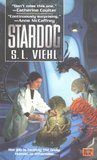
Review::Stardoc by S.L. Viehl

Stardoc (Stardoc, #1)Stardoc by S.L. Viehl

My rating: 4 of 5 stars


Stardoc(Stardoc#1) by S.L.Viehl

This is one of those books I so wanted to love. It has a lot going for it. As some have mentioned it has that certain something that came of the Star Trek era. It has a plethora of alien life forms; many are similar to humans and others are more like spiders and bugs. It has this political atmosphere where the Earth shuns the aliens though star travel is an every day thing. There is a slight air of superiority in this exclusion and that is a bit off putting while definitely not quite the same flavor as a Star Trek. But overall for this novel it works.

What this novel also has is a bit of romance and some mystery and these could be a great addition if there were not some elements about them that seemed to get in the way. I should qualify that I'm not averse to romance and more so in my science fiction. What I have a problem with is the manner in which it's presented and how that portrays the character.

The mystery is another thing that is one of those things that might be compared to humor. When done well it comes across quite successfully; but when mismanaged it can get in the way.

I have only four of the novels in this series; one thing they have in common is they start with a bit taken from Hippocrates. This is about a Star Doc so it makes sense and there seems to always follow a snide response from Cherijo, the main character, about the value of such advice. I suppose in a small way this prepares us for the sassy character behind these stories. Just a tiny bit of a spoiler here; I've read three of the novels so far and one thing that is clear is that Cherijo doesn't change much throughout. Oddly her character is like one part Bones from Star Trek and one part Bones from the TV series and one part Candid. I say Candid because sometimes her focus on healing makes her oblivious to everything else to the point that she often seems quite naive about life and the consequences of her actions and just like Candid she always manages to come out smelling like a rose even though she often has to roll in dung-heap a bit before hand.

The mystery starts right from the beginning when Cherijo is trying to get off Earth and away from her father. Of course this is a common trope in fiction so no surprise that the young woman wants to put as much distance between her and her parent. The first wrinkle is that her father is one of those who are bigoted against aliens; but we are soon to find that in some other beliefs he is quite hypocritical and one of those belongs to the list off reasons Cherijo is leaving Earth. Her destination is a Free Clinic on Kevarzangia Two where she will get experience in perfuming surgery on aliens. Her secret and her fathers secret and some few other revelations involving Maggie, someone she calls her maternal influence since she never knew her mother, are all stretched throughout. It would be a spoiler to state any of the secrets because so far they span across the three books I have read. This book reveals some, but not all. This I could live with but it was just one annoying thing that hung in there for me with a bad taste.

The best I can do in describing the romance in this book, well this one is the exception, for the most part Cherijo's romance is rather schizoid. Now on the surface one might argue that that word can't describe romance and I'm certain you are right; but read this novel and the next two and then tell me that that doesn't describe the romance category for Cherijo.

Regardless; Cherijo goes to the seedy part of town and hires Dhreen, captain of Bestshot, who decides he likes her after circumstances in the bar require Cherijo to display both her assertiveness and her dedication to healing. Dhreen agrees to take her to Kevarzangia and all that's left for Cherijo is for her to get off planet before her father finds out.

Cherijo makes it eventless to her destination where she takes up residency and meets a lot of strange species while not making many friends. She honestly has the bedside manner of Temperance Brennen sometimes. But she's so dedicated to her work of healing that she really steps into it when she heals a Hsktskt, one of the most feared and hated species. This gets mixed reactions from everyone and is soon forgotten when a plague threatens to overtake the planet; but not before Cherijo starts an inter-species romance with a Jorenian, Kao Torin. I've no objection to interspecies romance and Cherijo honestly seems to love him though she falls quickly into love. But alas I think that the author is using Kao. Enough of that though because it ventures into spoiler territory.

Overall I enjoyed this novel and read it in one night. My one qualm is that Cherijo doesn't seem changeable and at the same time because of some circumstances she seems to often be hard to pin down. I think that it’s the oath and her healing that tend to hold back the growth and often lead to confusing territory with the character actions. But more so, and this is a spoiler, it's the whole basis of the mystery and Cherijo herself being so perfect at some things that causes her to stay static throughout.

I recommend this to anyone who loves science fiction; especially the bug eyed monster kind and in a small way watching how a writer can take Star Trek and push it into a fifty-ish novel with a female lead that could only be conceived in the future.

I honestly thoroughly enjoyed the novel despite some of the drawbacks I've mentioned.

J.L. Dobias


View all my reviews

Friday, April 17, 2015

Review::Mark of the Centipede by Cara Brookins

Mark of the Centipede (Timeshifters Journey 1)Mark of the Centipede by Cara Brookins

My rating: 4 of 5 stars


Mark of the Centipede (Time Shifters 1)by Cara Brookins

This is a slightly different time travel novel than I've seen out here. This one requires less thought about historic accuracy and spends more time on the development of characters. It also has a bit of a twist in that there are two compellingly separate protagonists that end up at odds with each other adding a bit of wrinkle to the usual reader empathy factor. It also is written for young adults, but that doesn't stop me from enjoying it.

The story starts with a clever bit about Namor the Time Ranger who is inducted into the Time Rangers at age 12 and is 32 now and the agency has fallen on bad times and now most agents are Rogue agents who chose their own assignments and Namor's assignment is to locate another possible time traveler named Jordan Booker who is responsible for the death of Namor's time traveling parents.

Then the reader is introduced to Jordan Booker; perhaps to see how he became such a despicable person. Jordan and his sister Jada are on their way to Arkansas to live with their Aunt Maggie. They are orphans. And Aunt Maggie is now their guardian and she has used the (estate) money given her to purchase a rundown shack out in the middle of nowhere. Life isn't going to be very easy for these two and perhaps one might think that this and the abusive nature of Maggie might be what drives Jordan to evil straits.

On this secluded property is a crater that’s fenced in and its former owner, Albert, has been mining the crater for artifacts that might be alien in nature. Albert left some notes and artifacts and Jordan and Jada soon discover that there is definitely something strange out in the crater. Jordan eventually discovers that the Chronos (a possibly advanced society of some other time) have sent the time machine here so that he could travel through time and collect some artifacts that would help them save the future world. With that in mind he recklessly activates the time machine and ends up in a prehistoric landscape full of early humans who seem much more intelligent than historians have given them credit for with plenty of dangerous flora and fauna; and Jordan is stuck for 60 days before he can return. Jordan must undergo a severe self taught survival course and find the time machine, which has been moved; Plus he unknowingly is stalked by another time traveler.

So throughout the story we have two possible protagonist/antagonists who will eventually collide if Jordan survives long enough.

The novel is an interesting and surprisingly satisfying introduction to the strange world that Namor and Jordan live in and its interesting past. It also serves as a great medium to introduce the two characters who are destined to some eventual major conflict; but it’s a serial and there are three books: so it might be a while before I find all the answers.

Overall the novel is well written and draws to a satisfactory conclusion, leaving plenty of room for the next two novels. Definitely worth the time to read the well told story and crafted characters.

Good SFF for the Young and Adult and neat little Time Travel yarn though it does tend to stretch the Suspension of Disbelief factor a bit.

Well Done.

J.L. Dobias


View all my reviews
Monday, April 13, 2015

Review::Silver Borne by Patricia Briggs

Silver Borne (Mercy Thompson, #5)Silver Borne by Patricia Briggs

My rating: 4 of 5 stars


Silver Borne [Mercedes Thompson] by Patricia Briggs

This is book 5 in a series of books and I've not read any of the others so I'm not coming from the position of being a fan and some people might even wonder why I'm even bothering to try to pick up in the middle or even far end of something. The good news is that this stands well alone and there is plenty of information to bring a reader up to speed enough to understand this novel. I've no idea yet whether there's enough to understand the series, but it was a pretty fair read and since my usual genre reading doesn't touch much on Fae, Faries; and Shape-shifters; and werewolves; and witches. I don't come in with a whole bunch of baggage and expectations of what it means to be great urban fantasy.

I have read some of the samples of the first books and was already interested in this shape-shifting mechanic with an odd assortment of friends. While I was putting together a packet of paper books to have delivered to me, I was touched by a note that indicated I could get this bound edition for much less than an e-book or trade paper edition so I decided to give it a try before realizing that it was number 5 in the series. It sat with several others on my desk in a neat stack waiting patiently always trying to push itself to the top of the stack.

When I started reading it; it was much the same as the samples; with a sort of smooth story telling style that sucked me into the world of Mercedes Thompson. It didn't take long to find that she was owner of a specialty repair shop for imports and had a helper, Gabriel, who seemed quite normal and a few other helpers that seemed a bit more than what they appear. She also has access to Zee, the former repair shop owner, who stops by now and then to help bring wrecks back from the brink of death; sometimes he does this by way of his Fae Magic. Mercy has a bit of magic of her own; or at least she has a cane that follows her around and appears and disappears at the most opportune of moments. She has other magic friends and one of those has lent her an old book of Fae written by a Fae and this is what starts the story as she gets a call from a relative of the book owner, who gives her a strange message from Phineas Brewster about the book. When she attempts to return the book she finds that Phin might be missing and that begins a small mystery.

A more important aspect of this story is that Mercy is a coyote shape-shifter and her boyfriend Adam is a Werewolf and that relationship makes her a part of the pack: because Adam is the Alpha. There are pack members who are not happy with this and it creates a tension and subplot in the story that eventually converges with the main plot. Mercy lives in a motor home with a Werewolf roommate who has no pack and seems to be a long acquaintance; and though there are none apparent in this novel she has a few vampire connections, which show up as part of the contention between her and the Pack. Samuel the Werewolf roommate has his own subplot that also will converge with the main plot.

When someone mistakes Samuel's wolf for Adam’s and tries to collect an inexplicable bounty, someone has deadly intent, and Mercy eventually comes to the conclusion that the real target was her; and then begins the search for the reason that someone is trying to kill her.

To say that this has everything that a fan of Urban Fantasy could want would be a bit high handed of me since it's not my usual genre. But it has plenty enough for me with some tight writing and interesting plotting. The action and pace were good, though not the usual high octane stuff I see in today’s fiction; it was balanced well and kept the tension at the right amount in the right moment so it passes my test; but I'm not a great fan of the usual blood and gut carnage that seems to follow some of this genre.

Great urban fantasy in my limited opinion and well told story that might keep a few SFF fans happy.

J.L. Dobias


View all my reviews

Sunday, April 12, 2015

Review::Survival of the Fittest by Michael Taylor

Survival of the Fittest: The Last Hope for the Human RaceSurvival of the Fittest: The Last Hope for the Human Race by Michael Taylor

My rating: 3 of 5 stars


Survival of the Fittest by Michael Taylor

In the final analysis I enjoyed the story; but that’s not saying I didn't have some problems reading it. This is a book that one could really want to give five stars to; but you would have to make a number of stretches to accomplish that. I wanted to like this but I must have some predefined prejudices that stand in the way. This has the earmarks for a great start to a new series of books with a fantastic premise and some interesting notions; but there are some style choices that stepped in the way of my enjoyment of the piece as a whole.

Lindsey Sutten finds herself alone in the darkness with confusion about where she is and why she's alone and uncertain of where her mother is: and she is afraid. This begins the first of several sections in the first chapter that introduce us to the main characters that will share this story. Having them each start with a separate section breaks up the initial tension by spreading it out in a slight confusing way; yet acts as a means to protect the reader from the up and coming style decisions that might jar a few people out of the story. But the trouble with Lindsey is that she sounds, at best, to be ten or twelve years old but is supposed to be 15 years old.

The second section is Alex and Ricardo and since more than one character shows up here we start to see the style choices showing up. The POV of choice seems to struggle at being Omniscient and at best perhaps subjective because it comes just a bit close to becoming Close third and that even starts to be head hopping but we can let it slide if we consider it to be Omniscient third. The problem I had was that the POV went from outside to often close to each boy one at a time and then jumps into a Plural POV that I just let slide because it was brief in this section. Unfortunately this seems to be a deliberate act that is used throughout the book. It is meant to achieve something (I think); but it keeps pushing me out of the story.

The story is interesting and suspenseful despite my struggles with the style and it keeps me into it; to find out what's going on and see what's going to happen. So far this is starting to read like one of those thrillers that often devolve into slashers. I'm not sure how eager I am to go on; but I forge ahead as the people group together first in small groups and then one large group of seven only to be attacked and separated. But this is good it gives us different dynamics within the group as they work their way back to becoming one group again.

The first part of the novel is named The Inner World Beginning. The second part is called The Outer World Beginning. This should have been the biggest clue to another problem. Probably another that is just a personal problem to me. The next part takes us back 40 years to a time when Earth was visited by UFO's and we did all those strange alien autopsies and discovered that the aliens intended on invading earth and they were sending super soldiers that had been augmented. This is where things become X-files strange in more way than one. The decision is to create our own augmented army based on theirs so there are some experiments put into place. They are creepy experiments with rather cold heartless creepy people who are all trapped into the system that says the only way out is if we kill you.

The more important discovery in part two is the deceit. This novel is what I'll affectionately call a Deceit-topia. I have read a number of them now. By the end of the chapter we discover that the seven people we read about earlier, who were left fighting for their lives against aliens while they were slowly transforming into their own version of these aliens; is all a simulation and these youths and many more are being held in stasis while they experience complete immersion into the virtual environment where they have nothing to fear as they can't get hurt. Which sort of kills all the tension built earlier; but the cool part is that their changes in world are changes that they are expected to undergo in the real world; so it's forgivable: this Deceit.

It's about now that we start experiencing a lot of the plural third sections and I almost at first thought it was perhaps somehow related to these seven and some connection they might have. That hope proves false when later, further narrative from the doctors and scientists on the outside indicates that often, when there are mobs of people together, the narrative starts describing things that happen to them all together in plural third. Almost like a mob. A huge problem though with the scientist and doctors is that they all seem to be the same cold type of personality that has rationalized why they do what they do while at the same time there is an almost false appearance that fear is held over them to keep them doing what they are told despite their conscience (which later you have to wonder if any of them have a conscience). Often their actions conflicted with what the narrator wanted us to believe. I found it very difficult to find any one of them that felt real while they seemed to vacillate back and forth up and down some moral scale that seemed to be there only as a means to drive the tension of the story instead of helping us find out who these people really are below the cold exteriors.

That and the strange decision that they couldn't implement their special forces until after the entire world is slaughtered seem to make the outside world part of the story hard to rationalize.

As for the inner world; that is vindicated somewhat when one of the researchers goes mad and tries to destroy the program putting anyone in the world at risk of real death. So real tension again.

As a whole this novel looks as though it's the possible beginning of a series and it does have some potential, though it might be just fine as a standalone considering the possibility of it going close into the horror genre. If you don't mind head hopping and the often shifts to Plural third person then there is a lot of food for thought in this novel; though you might have to throw a bit more suspension of disbelief into the decision making capabilities of all the adults.

This falls into SFF and horror with some Deceit-topic tendencies. Great read as long as you don't try to examine the adult player's motives too closely.

J.L. Dobias


View all my reviews

Thursday, April 9, 2015

Review::Tmpest by Julie Cross

Tempest (Tempest, #1)Tempest by Julie Cross

My rating: 5 of 5 stars


Tempest by Julie Cross

I so much loved this novel. This was one of those that you go into a bit tentatively, not sure if you'll like it and in some way hoping you won't [It's a trilogy and if you like it, maybe; okay I'll look into the others later; but if you love it: then you're going to want to read the other two. Like yesterday.].

This was a great read. Done in first person and even with some sections in the bound book that are supposed to look hand written like a journal, which makes sense because Jackson's friend Adam has suggested that he needs to keep one with information about each of the Time Jumps that he takes. It was only by accident that he'd discovered that he could time jump and once Adam was convinced that that was what was happening, rather than Jackson having catatonic fits, Adam got on board quick and they started doing experiments to see how far back in time he could go. (The kindle version seems different with perhaps italic and bold italic for the handwritten part. So for the complete effect you might want to do the printed copies unless the first one is the only one that has this feature.)

Anyway Jackson's time travel life is his and Adam's secret and that will soon complicate things for Jackson, especially in his relationship to his girlfriend Holly. His dad seems too busy with his high paying job with a Pharmacy Company to take much notice. But when you are time traveling experimentally there are consequences, one of those being that you never know who might be watching. And though the reader soon finds out that Jackson's life is already a bit strangely complicate, it's about to get that much more complicated.

Jackson has a twin that died from cancer and he keeps seeing someone that looks like his sister; back before she died. Jackson and Courtney's mother died when they were young and their father had to raise them alone and when Courtney died that left Jackson alone. It's about the time that Adam and Jackson decide that there might be merit in finding out more about Jackson's mother, that all the experimentation catches up to him and while he is making up with Holly for having missed so many things while he'd been experimenting with Time Travel, they are attacked by some people who turn out to be time travelers who are aware of him and his abilities. Holly gets seriously injured and Jackson draws a parallel to possibly loosing her and having lost his sister and somehow he ends up trapped two years in the past (possibly from the trauma).

He needs to get back and somehow save Holly, but just as before he can only travel into the past; except now he ends up two years in the past as if that's his starting point and his real time is now his future. Between living two years in the past and traveling farther back in time, Jackson needs to find some answers that will lead him to the way of getting back to his own time. While he searches he uncovers a whole different picture about his own family and his father and his life and things will never be the same only because they were never quite what they appeared to be.

If Jackson thought life was complicated before; he didn't know the half of it.

Now the reader gets a better look into Jackson's past and into a bit of teen life while Jackson juggles life with his search and with trying to survive a past that he's slowly but surely beginning to alter just by being there. Throughout all of this the author never loses sight of the plot and the need to move the story forward and what develops it a tightly woven narrative that keeps twisting and reshaping as Jackson uncovers his past to save the future. Each step as the stakes get higher, Jackson finds himself with fewer people he can trust.

This is a roller-coaster ride with some big turns at the end that keep this exciting and still manage to give the absolute feel that this novel stands quite strong on its own despite being part of a trilogy.

Great SSF for fans of Time Travel conundrums and I just realized as I finished the sentence above this one, that I was going to give this one a five star.

J.L. Dobias


View all my reviews

Wednesday, April 8, 2015

Review::Goblin Moon:Mask and Dagger 1 by Teresa Edgerton

Goblin Moon: Mask and Dagger 1Goblin Moon: Mask and Dagger 1 by Teresa Edgerton

My rating: 4 of 5 stars


Goblin Moon: Mask and Dagger 1 by Teresa Edgerton

I read this novel a while ago and when I saw that the e-book was being re-released by a new publisher I thought I'd check to see if some problems had been taken care of.

This is an excellent read in many senses and it might be considered typical for what they refer to as GasLight Fantasy and GasLight Romance. And it has some very long sentences. I love long sentences and I especially love them when crafted well. This novel has plenty to whet the appetite and I shall show some from the first chapter that contain some of the problems I was looking at. Often the difficulty with long sentences is deciding how to punctuate them and sometimes that all boils down to style preferences. In this instance below the first paragraph seems okay but there was a glitch in my original copy in the second paragraph (that I had hoped would be fixed now), but it appears it made it through to this edition also.

In the paragraph that starts [For by river-wrack... ] at the word [floating] there is a period; which might be an intended semicolon or comma though I suppose that the following [with] might just be a new sentence with the capitol dropped by mistake; though this sentence works both ways and in a small way seems almost incomprehensible either way, unless you include the first paragraph, which is why I included it. Anyway at the very least I’m puzzled by the punctuation.
Quote::
Old Lunn, she was a capricious river, as Jed well knew: restlessly eroding her own banks, making sudden leaps and changes in her course, especially upriver in the country districts where there were no strong river walls to contain her. Swelled by a high tide or by the rains and snow-melt of Quickening, she swept away manors and villages, churches and farmhouses, crumbled old graveyards and flooded ancient burial vaults, dislodging the dead as ruthlessly as she evicted the living. No, the Lunn respected no persons, either living or dead, but the crueler she was to others, she was that much kinder to men like Jed and his Uncle Caleb.

For by river-wrack and by sea-wrack brought in by the tide, off goods salvaged from water-logged bales and salt-stained wooden chests, by an occasional bloated corpse found floating. with money still in its pockets, the scavengers gleaned a meagre existence year 'round, and— especially when the full moon brought high tides and other disturbances— were sometimes able to live in comfort for an entire season off the grave offerings of the pious departed.
Edgerton, Teresa (2014-09-02). Goblin Moon: Mask and Dagger 1 (p. 5). Tickety Boo Press. Kindle Edition.

The scope of these paragraphs and especially the second paragraph even if we split it seem to bring to mind that famous quote from Paul Clifford.
Quote::
It was a dark and stormy night; the rain fell in torrents, except at occasional intervals, when it was checked by a violent gust of wind which swept up the streets (for it is in London that our scene lies), rattling along the house-tops, and fiercely agitating the scanty flame of the lamps that struggled against the darkness. Through one of the obscurest quarters of London, and among haunts little loved by the gentlemen of the police, a man, evidently of the lowest orders, was wending his solitary way.
Bulwer-Lytton, Baron Edward (2012-05-16). Paul Clifford - Complete (p. 9). . Kindle Edition.

I've never understood this to be purple prose; because if read in context it makes sense that it really is moving the story forward and the same holds true when you read each of the long sentences in Goblin Moon.

What I did find in my reading of Goblin Moon is a pattern that accompanied the paragraphs packed with long sentences. Often they contained what might be considered info dump in the form of character or scene description. So rather than have nine sentences it might become three very long and eloquent sentences. Or in some instances one paragraph-long-sentence.

But speaking of Paul Clifford one could draw more than style similarities with just a casual look. Both novels have a roguish man falling in love with young woman of some moderate station and having her inadvertently falling for the rogue. And both novels have a striking similar ending.

Goblin Moon might be described as primarily the story of Sara Vorder and Francis Skelbrooke; but it is also a story of the lives that intersect with theirs and perhaps a bit of a comedy of manners as they navigate the customs and mores of their society and try to save their friends.

Rich in descriptions; I still found Goblin Moon has a solid plot making a satisfying and entertaining read; even though it might be a bit light on character growth.

Great GasLight type Romance for fans of that type of fantasy.

J.L. Dobias


View all my reviews
Sunday, April 5, 2015

Review::Oracle by Susan Boulton

OracleOracle by Susan Boulton

My rating: 3 of 5 stars


Oracle by Susan Boulton

I must admit that I was drawn to this novel by reading the first chapter and getting acquainted with the Oracle; a character; who reminded me of another character in something I recently read. In Diamond Eyes by A.A. Bell there is a blind girl not quite blind who sees the past (not the future) and rambles on about things and is generally ignored. But where Oracle is allowed to roam and live off the charity of others Mira was institutionalized and often kept sedated. Both are integral to the plot of the story and both seem to embody the most innocent of characters. (Though Mira does have the spirit of an imp in her.) And somewhere around there the similarity ends and the Oracle takes on her own life as I dig into the story.

This novel is billed as Gaslight Fantasy and mentions Steam power also on the cover though it is only the vaguest of reference drawn to Steampunk and this book surely does not lean much into the Steampunk. Gaslight or Gaslamp as some would have it, seems to be where this story is. I'm not sure whether to call it Victorian or Edwardian; but that is mostly my own deficiency. Its historical fiction of a slightly altered world that has a lot that borders onto the Paranormal. It is a landscape of intrigue and suspense.

We have trains; possibly steam trains though there is no real depth taken in their description. The train is important, because the first half of the book is a bit of trying to understand the Oracle's fractured predictions: possibly to save the day. There are two characters that seem to be the main characters in the novel although it took me a bit to finally decide that. Through careful elimination as many characters became duplicitous and multifaceted and deceitful. Finally it devolved down to Pugh Avinguard and the Oracle (who is really his ex-wife; Claire). Pugh is a quite well developed character while the Oracle's development is often stunted by her being two personalities struggling to control one form.

One hindrance for me throughout the novel was that the shifting point of view would give me several different explanations of events in peoples lives-somewhat based on rumor so that it was often difficult to tell which story was the truth. As an example the rumors ran everywhere from Claire being dead to her having eloped with Pugh then running away and having the marriage annulled. And finally; to her father arraigned the marriage for political reasons and Pugh having cast her out and divorcing her and thwarting his father inlaws dreams. And I might not have all of that correct; but there were other characters as equally misrepresented this way.

This world in which the Oracle exists is one where slavery is practiced under another name and passed off as the best way to take care of the poor. There is change in the air and the Oracle is in tune with this though the political climate is still fraught with those who are comfortable with things staying the way they are. But rebellion is afoot and foreign interest would love to see the country fracture under the stress of social upheaval.

The Oracle has a future that seems to be heading into a dark area of things, but the reader is not to fear as there is some hope of redemption; though it may cost the few that are near to her.

There is an end to this story that can satisfy the reader, though there seems to be a large number of threads that are left hanging; or perhaps left to the imagination. It is difficult to tell from this if the author will seek to visit this land again.

Overall the novel has solid writing with a fair to sprawling plot that only resolves, at the end, if we look strictly toward this being the story of Clair and Pugh.

I would have loved to see Claire come out stronger in the story especially when there were other strong female characters such as Elizabeth who delivered my favorite tongue in cheek statement.

Remember, I am just a woman, and you are making my delicate mind hurt.

Boulton, Susan (2015-03-31). Oracle (Kindle Location 150). Tickety Boo Press. Kindle Edition.

J.L. Dobias


View all my reviews

Saturday, April 4, 2015

Review::Suspended Earth by M.R. Mortimer

Suspended EarthSuspended Earth by M.R. Mortimer

My rating: 3 of 5 stars


Suspended Earth by M.R. Mortimer

Cyberpunk has been around since well before someone coined the term; sometimes lightly touched on by such greats as John Brunner and Philip K. Dick and in some cases examined to the extreme. But usually what stands out in the mind when another cyber punk novel comes around is; oh another matrix book. I suppose some might nod more toward William Gibson and say another Johnny Mnemonic book. Well they might pick one of his several other books. This book starts out a lot like the Matrix and eventually leads to a grossly nasty scene where the main character apparently explodes all across a room in a bloody mess as he vanishes from the net.

Fortunately we right away get images of what is: as opposed to what appears to be: and there are scenes of a caretaker with tanks of people in suspension with tubes hanging from them. Inside the Caretaker Generation Facility is the single caretaker who is getting ready to be replaced. His replacement apparently comes-seamlessly out of the many rows of potential candidates-and the caretakers own retirement to an incinerator is all done in a placid tone. It's a well orchestrated transfer, all done through the agency of a computer and in just the right number of steps that when the new caretaker goes crazy and nearly destroys some critical panels the old caretaker has already been incinerated and the computer is forced to kill the present caretaker and quickly extract a new caretaker.

Enter Daniel who is yanked out while with his girlfriend; leaving her traumatized in a grizzly room and left to answer questions the police have. Soon, by virtue of the virtual environment she discovers her boyfriend is not who he said he is or maybe even didn't exist and the police begin to suspect she's the victim of a gruesome hoax.

In the real world Daniel is confronted with a new reality including the body of the last failed caretaker as warning not to upset the computer. Daniel is left to try to figure out what's going on; but the computer has been programmed to not be very helpful in that area. Fortunately Daniel is a bit of a computer hacker and he begins to examine ways to get past all the safety features and in his efforts to locate his girlfriend and try to contact her he eventually triggers an event that nearly begins the destruction of the virtual world and that would mean the death of everyone in the tanks.

It takes a good portion of the book to get to a point where the people in the virtual world are safe and Daniel and others are able to, through the help of a rogue program previously inserted into the system, remove those who want out and begin to build a force that can investigate what is actually going on. They think they can do this, because there are a multitude of similar facilities in the world that have been programmed to various different historic eras and they are certain that one of them has clues to what might have happened; to have most of the earths population placed in these tanks.

Soon it's discovered that in our exploration of space we came across a race of beings who found that the human body contains a resource that they need and through some form of sinister alliance with humans have created these massive farms to keep people like cattle and oblivious to the real world as they live their lives in a virtual world.

This is when the real story begins and the struggle for mankind to regain it's foothold on its own planet.

This is a mostly well written story that appears to be a Prequel to the Author's previous work that takes place in the same universe. If I have any complaint it would be to the dozen or so times the sentence structure was convoluted enough to confuse me. They weren’t passive sentences, but they were just as difficult to read as any of the worst of those.

Because this was apparently written long before the others and later altered to fit into the front end of his series of books it seems appropriate enough to become a debut novel of a sort with a possibility of having a lot of his younger raw talent exposed. I have yet to read the others in the series, but this one is done well enough to entice me into finding out what else goes on in the strange universe as Earth regains its freedom.

This is fair SFF and some CyberPunk with a bit of a twist and lots of potential for future stories both in the real and the virtual world.

J.L. Dobias


View all my reviews

Thursday, April 2, 2015

Review::Abendau's Heir by Jo Zebedee

Abendau's Heir (The Inheritance Trilogy Book 1)Abendau's Heir by Jo Zebedee

My rating: 3 of 5 stars


Abendau's Heir (The Inheritance Trilogy Book 1) by Jo Zebedee

This is one of those novels that I wanted to really like maybe even love. It has that potential. And yet, in my enthusiasm I kept stumbling through the first chapters with this odd feeling of disconnect that confused me. I had to read through a second time to try to figure out what my problem was. Style choices the author made might have resonated with me in a rather unusual way. I would have to definitely recommend that others not take my judgment without trying to first read the novel. And then, if you do find some trouble as I did, you might want to tough it through; because eventually you'll get used to way the author writes and you can better appreciate the story.

This is a dark story, which was a bit unexpected: to me. It's a tragedy wrapped in a dark world. It reminded me of a discussion recently about GrimDark being a genre and someone’s argument that it was meant to be an ironic or satirical comment about certain over the top writing. I should qualify that I think it's a valid and respectable label these days; so when I say that this novel is GrimDark I mean it in a good sense. Jo Zebedee's world and universe is a dark universe that is lorded over by an evil Empress. But more so than that it's an unforgiving universe where every action has its consequence and, though some may have potential for good outcomes, the reader quickly discovers it pays to keep those consequences in mind; because they will show up like a bad penny.

If you read the prologue carefully you'll have everything you need to know. Ealyn is a seer and the Empress is evil. The Empress forces Ealyn to look at the prism and see her future, but not just her future; his too. The Empress has powers to delve into other minds so she too can see what he sees. Ealyn resists; because he knows there are great consequences to what he does when he Seers. But what he sees is that somehow the Empress is now pregnant with his and her children and that between their two powers she means to create ultimate power for herself. He sees the result in the cold adult faces of their powerful children and is horrified. After the Empress leaves his cell Ealyn is once more drawn into a vision; but this time he sees himself free and then he sees his children now happy and free. Energized with that vision he throws caution to the wind and despite knowing there will be everlasting consequences he's determined to find out how to make the second vision a reality and will seek the answer through his visions.

The first chapter brings us eight years in advance to a point where Ealyn and his children, Kare and Karia, are in a tenuous life aboard a spaceship trying to get by while the Empress pursues them and the rebels deny them full access to the rebel base because of the danger the Empress and her relentless pursuit represents. Ealyn is stuck between a rock and a hard place; because of all the time he spent doing visions he can see that some horrible future is overtaking him no matter which direction he goes and soon Kare will have to be trained to control any tendency to Seer. In a feeble effort to train Kare, Ealyn goes too far and is sucked into a trance like state to the worst of futures. The only hope for help to bring him out of this is to go to the rebel base where they will eventually be ejected again. All through these chapters it is for some reason very difficult for me as a reader to get close to the characters; but that turns out to be a blessing since people are about to die.

Eventually Kare will be left alone with relatives-more people who would rather not have the object of the Empress search in their home. Again we fast forward ten years and from here this becomes the story of Kare's tragic life in his efforts to elude his mother and stay alive. Kare doesn't get many breaks and every decision he makes has consequence, some of those not apparent to him until after he makes them. This does keep the tension high in the story and in some part helps the reader understand the final outcome to some degree. But let's get back to figuring out which part of my personal preference interferes with the style choices in this novel.

When I looked back through the second read I realized that the author loves long sentences and has a fixation on commas. This is not all bad. I love long sentences and enjoy the ones that are properly punctuated. The problem comes in some of the medium size sentences that almost appear to be long sentences that were shortened to vary the beat. The problem with that is that there is that beat or rhythm of the sentences in a paragraph and the more internal beat of the individual sentences that you start punctuating with commas and semicolons.

In the first paragraph this sentence…-
His captors knew him well enough to use subtle things to torment him: the sound of water, so blessed on the hot, dry, Abendau; the prism on its thin chain catching sunlight from a small window and sending rainbows darting; the slow build of pain in muscles held firm, a pain that went deep, full of despair.

Zebedee, Jo (2015-03-29). Abendau's Heir (The Inheritance Trilogy Book 1) (Kindle Locations 29-31). Tickety Boo Press Ltd. Kindle Edition.

…Begins to highlight both the skill of the author and the beginning of a pattern that threw me off just a bit.

This part--so blessed on the hot, dry, Abendau;--creates a distinct staccato effect separating out Hot- Dry - Abendau; giving it an intended beat and alone it seems quite harmless, but quickly it shows up again and again until it's like a pattern. Often there are separate sentences engineered into incomplete thoughts that get chained by commas while ignoring conjunctions to create the same distinct separation that might just as well have been short separate sentences; though those would once again interfere with the rhythm.

For me though this created a second problem because the narrator often was this shifting close third POV that unfortunately always has the same quirk and that tended to overshadow the character development and I had difficulty separating the characters from one another. The irony is that they are distinct characters once I get past that peculiar distracting consistent beat. The dropping or ignoring of conjunctions to create the beat creates a distinct narrator voice that becomes hard to separate from the close third POV.

The writing is good and tight and sometimes even a bit too sparse. There are only about a handful of sentences where I felt words were missing and they usually were stuck within these bits of beats as though necessary verbs were thrown away (I have no idea if that was by accident or on purpose.)

The plot is tight and as I have said quite dark.

If as a reader you like stories that balance upbeat with the down then this might not be for you. Not to say there are no upbeat moments, just that those usually follow major decisions and then there seems to be a need to show the consequences. If you are a reader who likes happy endings then I would stay away from this one. This is a tragedy in many ways and perhaps because the author intends to have more novels in this series she creates several tragedies at the end that drag the whole into a downward spiral. And those follow the major tragedy of the story pertaining to the primary protagonist.

All of the tragedies at the end, after the primary (concerning Kare), seem either to be part of a summation of what happened afterwards and the consequences; or they act as a prelude to the next story. I really find it ambiguous in that respect and probably could have stopped at the primary tragic choice without the extra added summations after; which could have been left to my imagination and for the next story. As a whole it just made the story that much darker.

This is okay SSF light on the science heavy fantasy and great for those who love GrimDark tragedies. And if you love novels that delve thickly into the consequences of the character's actions this is going to be a treat.

J.L. Dobias


View all my reviews