 Mendoza in Hollywood by Kage Baker
My rating: 4 of 5 stars
Mendoza in Hollywood (aka. At the Edge of the West) by Kage Baker
This is the third offering in The Company Series and my second read of Kage Baker. I skipped Sky Coyote because I enjoy the Mendoza character and wanted to get more of her, but if I continue reading this I think I'll have to begin now to read them in order or things may not work out well. I'm getting a sense of this being one rather epic story being told in several novel size chunks. Based on some comments about that last few books in the series I would have to say that the only way I'll be able to judge properly is to try to get the entire picture in order to understand the ending of the series. In the final analysis of this novel I still have to say I'm hooked on the Mendoza character and would have liked to have been assured that she had a greater part in the remaining parts of the story.
I love my fiction character driven, and that's what makes this and the Garden of Iden outstanding as novels. The story and plot in each seems somewhat incomplete although there is still that flavor of completeness extant. Unfortunately both novels have the tragic romance as the main arc in each; although there are differences in the loves she has, even if they could be twins.
Upon having her first lover discover she's an immortal Cyborg and having him decide she's a devil and trying to take her with him when he allows himself to be burned to death for his overzealous religious convictions, Mendoza is content to stay clear of mortals. Unfortunately she keeps having nightmares that her lover is returning to her; and in most cases he's attempting to finish the job of killing her. Only her nightmares might be something more to do with Chrome radiation she emits that causes a distortion in time. When the twin to her lover shows up, over 150 years after the first is burned to death, she tries to be cautious about falling in love again; but fate won't let her off that easy.
Though the story takes place mostly in the area that will one day be Hollywood and there are allusions to the streets and structures that will some day be in specific spots, there is one chapter that confused me a bit--meaning I may have missed something and I hope it wasn't important. Though it is 1862; Mendoza and her companions are all Cyborgs created by the people from the future who were originally testing immortality by altering non-significant people through out the ages in the past (what better way to do so than to go back in time and change people then check up on them in the future when you return). The Cyborgs are also then enlisted to secretly store things from the past that are known to have gone extinct or disappeared and caching them away for the Company. They also are trained in a facility that has many future features, so thus acquainted; it makes sense that they would have movie nights through the delivery of movies from the future. I'm not sure why, though, the movie Intolerance by David Ward Griffith ends up being discussed in length as they watch it.
To get back to the story--at some point Mendoza realizes that this incarnation of her lover, though not as likely to have as adverse a reaction to finding out she's a Cyborg, does have a fatal flaw. His overwhelming dedication to his work makes her think he would have made a better Cyborg for the Company than she is. The rest of the story from here on seems to both complete the tragedy and contribute to foreshadowing the future. Too much discussion would spoil things and this novel bears reading..
Kage Bakers blend of wry humor and historical references as before makes this a singular and entertaining read.
This is a great SFF read for fans of Historical fiction and Time travel novels along with Romance (mostly those who don't mind the bit of tragic romance.)
J.L. Dobias
View all my reviews
 Fear the Survivors by Stephen Moss
My rating: 4 of 5 stars
Fear the Survivors (The Fear Saga Book 2) by Stephen Moss
This novel is a fantastic read for all those fans who love the scientific military novels that delve into both the description of the science behind the weapons and their deployment. It is also a novel for those who like those political thrillers that delve into the intricacies of diplomacy versus the high achievers who just want to see things completed. And it has great suspense, as against this backdrop, we see almost indestructible forces working in the background to manipulate the Earth toward its own destruction. Well the destruction of all humans anyway. It would be preferable that atomic weapons not be used to destroy the very resource that brings the aliens here to conquer Earth. This novel also includes some elements close to cyberpunk with creations that are close to what we are familiar with in the Terminator franchise.
All of this makes for the sound of an exciting novel and I have to admit that I did greatly enjoy the read. The problem for me is that there is much more than what I've mentioned and hardly enough room to contain it all. That means there were some decisions made about how to tell the story that in a small way limit the novel. At least it limits the novel for me. I have special needs in that I love character driven novels. This novel has plenty of characters and many of those carry over from the previous novel. The characters are quite complex, but the style of writing seems to come from an Omniscient third many times that drops to almost objective omniscient view other times(There is just enough subjective along the way to pull us away from objective though the Prologue seems to start out objective: or at least that's how I saw it). This leads to the science often coming in vast spurts of narrative that sound like textbook data. For me it felt like we went through Close Third Omniscient to Omniscient that wavered between the objective and subjective and it was probably my own failure to pin down the exact POV that made the first part of this novel a difficult read.
Chapter one begins feeling almost like a close third yet somehow omniscient; but never quite close enough and then it almost seems like the narrator starts to get a bit subjective and in fact begins down a style path that stays with the story throughout. This is the path where the narrator tells the reader that there are things that the characters don't know to lend to the story a bit of foretelling or foreboding. Mostly the first part of the novel is catching us up on the previous story and, though the urgency of the alien invasion is pushed back a bit, we get a slow trickle of information that brings someone unfamiliar with the first book up to speed. I would recommend reading the first book. And anyone who has read that is familiar with the author’s style and if they enjoyed that book this one is every bit as well written.
There is a slight bit, possibly, of humor, which brings us closer to the alien invaders. This deals with Lana who set off a nuclear weapon in order to save herself. She's repairing under a trashy trailer in a trailer park where a pair of 'trashy' people live. What she endures leads her to plot the death of the trailers occupants. From there after repairing she begins her terminator style killing spree. I had a hard time with this part but some people might be able to appreciate better than I did. Once again this gets us up to speed with both the character Lana and her quest for revenge. (Possibly any problem I have with this stems from having twice lived in trailer parks: maybe not as trashy as this one.)
Half of the novel is filled with the science. The science that brings Earth up to speed with the aliens and all the equipment that will be needed to use as weapons against the coming invasion force. Along with this is the arc of finding and executing the remaining part of the advance force (except for the two who have decided to help Earth resist the invasion). The second half is the political posturing and the arc that shows us how the main character Neal goes from being a key member of the United States response to the invasion, to something more autonomous and what he has to endure and the compromises he has to make. One problem with all of this is that the story doesn't take off for me until Neal begins breaking away from this political umbilical cord. Neal has grown quite a bit from the last novel, almost beyond his own original character.
Stephen Moss demonstrates a vast knowledge of global affairs and politics along with an interest in the science around the development and use of military grade materials. There is a fantastic scene drawn out in one place where the tether for the space elevator is dropping out of the sky and vehicles are attempting to retrieve it to bring it to its anchor point. I have no idea about the physics but it is a pretty intense piece of reading. A lot of the science and even the politics seem to be used as a build-up to the final demonstration where we get to see the pieces fall together and either fail or succeed. In this way I was reminded of a recent read by Tom Kratman's A Desert Called Peace.
A pivotal new character is brought to us via the initial story summary at the beginning and that was probably one of my favorite characters in the story; though they don't get that much time in the story until near the end. This character reminded me of Orson Scott Card's Ender. In that they are being placed in a similar situation.
Over all, despite my own feelings about the style choices made, the choices reflect the same as those in the first novel, which speaks for consistency. And for those people who like their science to be well thought out and consistent and also like stories with description of the manufacture and capabilities of the hardware that's being used, this novel will fill the bill. It kept my interest and I definitely want to know what will happen in the next installment.
If you are like me and find that the first part almost drags a bit, I'd advise sticking through it all because it will pick up and if you have read and enjoyed the first book then this one won't disappoint. There are about a handful of strange grammar glitches along the way, but not anything too disturbing. Sometimes a duplication of a word on either side of the word it is modifying.(Almost as though the wording of the sentence was changed at some point and a deletion was missed.)
If you like all the science stuff or the military science fiction then this will definitely take care of your needs. For those who like the suspense of international politics; there's a heavy dose in the mix. This is all paced well with action and plenty of conflict.
Something for almost everyone.
J.L. Dobias
View all my reviews
 The Soldier's Sympathy by Chris Guillory
My rating: 4 of 5 stars
The Soldier's Sympathy by Chris Guillory
The Soldier's Sympathy starts with and Epilogue and Jaron, an evident assassin for Kamiken [A sort of Corporate Agency that employs mercenaries.] We see Jaron casually making his hit while talking to himself. Only he's getting answers in his head and for a bit it might sound like he's employing some sort of advanced AI weapon that is helping him acquire the target; if not for his asking the voice to recall their wedding. After the kill we get a flash back to when Jaron was a soldier on a mission to the moon to rout out a nasty terrorist group known as the Tantalus [Think mindless zombie like followers who eat other people]. There ensues a slight bit of techno-babel related to the mission and a slight bit of world building that is mostly, but not quite (we'll see the Tantalus later), unimportant because the point of this flashback is that upon completion of the mission Jaron gets the bad news that his wife Mari has died; victim of an accident. This is followed by a brief explanation how that all leads to his employment with Kamiken and the suggestion by them that he have a Sympathy implant.
This is a good novel and right away we can see it will be a suspense novel with elements reminiscent of Philip k. Dick[[ASIN:0547572298 Ubik]] or for more recent readers perhaps William Gibson [[ASIN:0399158448 The Peripheral]]. But as I read on I find it has so many more elements twisted into the plot that it might seem a bit overpopulate. It's also a neat adventure yarn for those who love the near ceaseless action. But being suspense it carry's baggage that I've always had trouble with in this genre and that more than anything is what prevents me from giving five stars. I do give it high marks though and for all of that as usual I'll try to explain myself somewhat. Not everyone will agree with the way I see things and I certainly don't want to discourage anyone from reading this because it's the kind of book that you will want to read in one sitting regardless of whether you are capable or not.
I resume the story with Jaron reporting in to find he has another assignment with just enough time to rest in between. I get to know a bit more about Jaron but Jaron is one of many mysteries in the story that create the suspense so Chris Guillory deliberately short changes the reader on details. As with all good suspense I'll get to know what I need to know, but only when the author decides. There are many such omissions throughout and for me as a reader these add up to anticipation of a big payoff and in most instances the author acquits himself.
I get a walk through of the building Jaron works out of; one somewhat protracted by detailed description until we reach the assistant's office out side of Mr. Santos office, which thankfully is sparsely decorated. But this is setting a tone I'm going to see throughout for both the type of description of scene and location and the techno-babel involving the hardware employed by the mercs. For the reader who gets excited about world building and the detail of weaponry this novel will be a great treat.
The next scene I get to is the next assignment that is a retrieve or kill situation. Here things go poorly and it turns rapidly into a kill operation (Well, maybe a bit sluggishly considering all the detail to hardware.) Still as it turns out the target is a child. Thankfully Jaron makes a hasty decision and turns on his comrades and runs off with the young girl. By this time we're introduced to at least five distinct and well developed characters and there will be many more; almost an overwhelming amount for this reader.(I'll get back to this.) For now though the important thing is that for me I struggled with this turn about because all there is are hints to some element in Jaron's past that might influence the mans decision to risk everything to save a child. Sure it is a child, but up to this point all I know is that all these characters are ruthless killers. But once again this is part of that mystery and suspense aspect of withholding information.
After the failure and loss of the target and Jaron two of those involved are sent on a pickup that will intersect with more people important to the story. Alex Ibara and Daniel Richter are official police troops investigating a case involving someone who might be having a reaction to his Sympathy implant. The two Kamiken agents have been sent to intercept the suspect after they take him down. Despite objections that Alex and Dan have about giving the man up they have to because of orders from headquarters, but they both suspect that something is way off. Their subsequent investigation leads them head on into a confrontation with Jaron who is on the run with the child. Alex turns out to be the one character I love the most in this novel and it might be because she's one of the few major players who doesn't seem to have all the extra baggage that we aren't suppose to know yet. It might also be that her point of view isn't as cluttered with all the techno-babel, though I'm not sure why because she is in possession of one of the neatest technical devices.
It would probably take a novel to mention all the major players and that might account for why it seemed that the story would always bog down a bit while we encounter a paragraph or two of the newly introduced characters. It took me a while to get used to this pace to where I began to expect it and was sometimes pleasantly surprised when I received information about other characters through the eyes of someone else. Strangely it was often someone looking at one of the many ones with mysterious pasts and there were clues included for the reader, like specific tattoos and such which are important later. Once again I might be hyper sensitive to this and it's best for the discerning reader to make their own judgment.
This novel contains a lot of familiar elements to me. Throughout the novel the scenes switch up through a wide variety so varied I had visions of several other stories come to mind. When describing the facility where the girl, Jessica, had come from and her dreams of what might have occurred there, it brought to mind A.A. Bell's [[ASIN:B0047O2JB8 Diamond Eyes]]. And of course the flight scenes with Joran and the child reminded me of Stephen Kings [[ASIN:0451167805 Firestarter]]. But much later some desert scenes couldn't help but bring to mind the Mad Max movies. Later there is an explanation of the auger witches and how they interface with computers and satellites and the use of a viruse that regulates the connection which brought to mind a recent read of Tara K. Harper's [[ASIN:0345380517 Cat Scratch Fever]] and subsequent sequel [[ASIN:0345380525 Cataract]]. And this story does get every bit as gritty as the Cat Scratch Fever though it doesn't ever get quite as dark.
So though the ground work is familiar there are some style choices that make this unique to itself. Some choices seemed a bit risky but many paid off in the long run, but for me it meant that I had to get 20 percent of the way into the novel before it really took off and that was only after I managed to understand the pace and general style of presentation to where I could anticipate certain slowdowns at the introduction of each new major character.[Sometimes the effort seems to be duplicated in that as the story unfolds we get to know what we need to know without the separate blocked paragraphs of character description, though those blocks did help to cement the differences between characters.] There are grizzly elements in the description of many scenes because there are scenes with mass slaughter happening, which are mostly justified by the need to level the playing field between protagonist and antagonist by a show of somewhat indiscriminate destruction evident in the nature of augmented mercenaries.
This novel should excite most SFF military suspense enthusiasts and contains elements of Cyberpunk and even a slight dystopic atmosphere.
I highly recommend this to those interested in this type of fiction and despite my protests I did read it all in one sitting; because I was really interested in getting the answers to the questions. The reader won't be disappointed.
One note: There is one possible plot hole, but to discuss it would give away too much and spoil things so my best suggestion to the reader is to see if you notice it when you read The Soldier's Sympathy. [I'm easily confused sometimes and this may be the case. (translates:: I'll probably have to read this novel one more time.)]
J.L. Dobias
View all my reviews
 Cat Scratch Fever by Tara K. Harper
My rating: 5 of 5 stars
Cat Scratch Fever by Tara K. Harper
I was intrigued by this one, but someone else mentioned that it was one of Ms. Harper's darker novels. Close to the same time that she published this there were many more authors digging into what might be the darker side of things . Susan R Matthews was soon beginning her series of books with An Exchange of Hostages and Valerie J. Freireich had her Becoming Human and Testament. There are many more. I'm not averse to dark so I waited for the book to arrive since it has not yet been converted to Kindle friendly. I wasn't disappointed, in fact, though this takes a reader from their comfort zone this is by far the best showcase of her talent as a writer, though my reading of her works is slightly limited.
This starts out as the simple story of Tsia, a biologist of a sorts, who wishes to join the Guide Guild. To do this she must be subjected to the 'Virus' which will help her mentally bond with other life forms on the planet Risthmus. Everyone is connected to a gate that is like a wi-fi connection inside their head to a network for communication and information. [It is much more because the adept can use it to lay what they call ghost-lines that will help hide their activities.] Tsia's gate is inactive because of a quirk with the virus. Also the virus has caused Tsia some bit of problem because her's has linked her to a forbidden life form the Cats on Risthmus who used to be used by the guild but are now under an edict that forbids contact and her virus has matched her with them making her Guide Guild abilities useless. But Guides also dance the fires and Tsia can still do that and that is going to be a problem for her quickly.
A group working for the Artist Guild are out looking for someone just like her to pluck up and kidnap to press into slavery for the Artist Guild.[There is a rather complicated plot about using the firedance skill in an artists artwork.] This is where the book goes dark and the reader starts getting a really close look at a complicated social structure on this planet. The Artist Guild make art that embeds the experiences of other's sensory experience into the art which sells very well and they have come to deal ruthlessly with the models until few volunteer to help them; so they have stooped to slavery where they use and abuse the subjects until they die. And because of Tsia's isolation from the gate these people who kidnap her are able to turn her into a non-person [Everyone assumes she's dead] so even if she escapes she can't legally use the gate. The artist who buys her is relentlessly sadistic and there will be scenes that will push many readers to the limit of their comfort zone. Some of these include children. Thankfully Tara Harper did not find it necessary to go into graphic detail. The point was to demonstrate how easily people can fall into slavery while the master uses others around them as bargaining chips and in this instance since they didn't want to mar Tsia physically that's how they meant to control her; by first threatening the slave responsible for indoctrinating her and then the children of other slaves, assuming that her own freedom would be less important to her than her compassion for the lives of the children. What I found the most insidious was the explanation given by Vashanna, the other slave, as to why Tsia should do as the Artist wants. Vashanna is convincing in that it is clear that that is what she believes and she's fully bought into the whole picture.[It has to be understood that the slaves can be tortured by a device(r-con) that leaves no marks and in the case of Vashanna her use has reached a point they didn't care about her looks so they also physically torture her.] Vashanna and Tsia seem to represent disparate sides to the slave equation.
The dark part of the story does dominate a large portion of the front of the novel, but the payoff comes when things turn around and Tsia and several others must struggle to survive the harsh desert that stand between them and freedom. This story has some epic world building and there is a second story happening that Tsia is a reluctant part of that involves prophesy that she doesn't believe in. Since this is part of a series it's likely that there may be more about this. But primarily we see the evolution of Tsia from someone blissfully unaware of the limitations she places upon her own life to make her a virtual slave; to someone aware and perhaps overly paranoid about where she might be compromising herself and her freedom and developing the resolve to never do so again. Tsia is a complex character who undergoes change but constantly remains complex.
This is a fantastic read in the SFF arena and though it has strong Fantasy elements it also has some interesting Cyberpunk notions that are more rooted in the use of the computer connection to be used in the real world.
Yes it's dark and if you are squeamish about bad things happening to children then you might want to tread carefully.
One last note, this bit about the artist guild using slavery to squeeze the best work out of the subject matter made me have a thought about writing and the author and how some of the most interesting novels are those where the artist[author] forces the characters into the worst situations that they could possible imagine and then somehow manage to continue to roll that into ever more conflict until they milk the character for everything they are worth with seemingly no compassion for those poor characters.
It's just a thought; but read Cat Scratch Fever and try to keep that image out of your head through the first portion of the novel.
J.L. Dobias
View all my reviews
 The Measure of the Universe by Ellen Larson
My rating: 5 of 5 stars
The Measure of the Universe by Ellen Larson
This novel is a well written and well rounded piece that stands alone as a great addition to any Science Fiction lovers collection. But, if you are interested there is a bit of story behind the story that can be obtained by following the web links to the author's apology.
The novel itself is short but filled with a lot of thoughtful information. The nub of the story boils down to some basic things. In the world of R.H. Herman and Dr. Aisha Thanau aliens have landed and they have far superior technology, which they do not plan on sharing. They have come to study us while attempting to not interfere or change our present culture and level of existence. Whatever reasons they might have, Mr. Herman must convince Dr. Thanau to assist the alien Titek in his pursuit of the studying ancient human language in order that Mr. Herman's government might use this time and her insights to discover anything about the hidden knowledge of the aliens. In several small ways Aisha can't refuse and they move forward swiftly. The author compares this work brilliantly with the Prometheus myth and as the story plays out the comparison becomes more evident.
Personally, right out of the box, I began comparing this to a certain science fiction franchise and their prime directive. This time the directive is aimed again at mankind, but there seems less of a likelihood the aliens are setting up camp to wait for us to meet some magical bar that will take us over the top to the next level. No; to them we are the primitives, although we are advanced enough for them to reveal themselves. As it turns out that is just barely advanced enough. The aliens also exhibit a bit of Xenophobia mixed with an unhealthy dose of Xeno-superiority. Overall it was interesting for me to think about Prometheus and the Prime Directive together.
Titek, who might be compared to Prometheus in this story, is here because he's an archaeologist who in particular is looking to study the development of language. In this story these aliens have advanced far beyond us in that their normal method of communication looks like magic to us. Along with that advancement they have, at some point in their history, destroyed all evidence as to how language developed. That destruction has led some among them to believe they were born with their present language skills. Titek believes otherwise and is now on Earth to study our development of language in order to draw comparison between that and what might be his own people's true development. In this way the aliens do seem truly alien since it seems they did not develop language as a means of passing on history or at least they have abandoned history at some level.
Ellen Larson adds a wrinkle to the story as the reader discovers that Aisha is blind; a condition that Titek finds appalling, although he is not at liberty to offer her any help from the superior technology he has available to him. The remainder of the story might be considered the setup for making this a Promethean type story.
There are some very clever and laugh worthy moments in the examination of the use of language. Titek seems quite versed in English; but there are many idioms and some few metaphors tossed around by him, some of which are slight massacred, that began to confuse me about whether he was confused about the application of idioms or if he was showing his mastery by being deliberately obtuse.
The entire premise of the story with each different aspect of the alien culture neatly stack up creates an excellent reason for the alien's to be compelled to come all the way out here to visit us. I'm not at all certain whether it's helpful or necessary to make the Prometheus connection before or while reading this, but in reading the author's apology the reader should get a good sense of how thing are logically worked out.
Overall the great prose and intelligent story create something that all SF and SFF fans should greatly enjoy.
J.L. Dobias
View all my reviews
 Brightness Falls from the Air by James Tiptree Jr.
My rating: 5 of 5 stars
Brightness Falls From the Air by James Tiptree Jr.(Alice Bradley Sheldon)
I can honestly say I've read few of James Tiptree and that is mostly because she was mostly writing short stories and though I've read a few short stories now and then I prefer novels. She has two of those to her name and this one was in e-book format and after recently reading one of her short stories I felt compelled to read a novel.
Though the novel starts with a paragraph that sounds quite descriptive it is misleading in that it seems quite innocuous and this reader felt he had to dig down further to find a reason to continue. But the entire first paragraph actually sets up a bit of the conflict and one of the main plot points in a rather sneaky way.
Farther down though we are introduced to the three custodians of Damiem and its inhabitants the Dameii who appear to be fairy like creatures with thin frail wings. The planet is protected like some large preserve and the three humans, along with a ship in space, protect the Dameii who were once abused by human drug runners.
The three humans, Cory Estreel, her mate Kipruget Korso and their friend Doctor Balthasar Baramji ap Bye— Baram or Bram, the Senior Xenopathologist, all have a bit of a past that will unfold to the reader as the story moves forward; but to begin with we find the present situation. Cory and Kip are mated and the Doctor has long since lost his mate. Somewhere along the line after his time of mourning we find he may have made a pass at Cory who, being faithful to Kip and understanding other difficulties that could arise from any relationship, resisted his attempts. In all, it seems that it may have cemented the relationship between all three.
As the story opens they have visitors arriving on planet, who are there to observe the effects of a nova upon the space around Damiem--the recently nova star is mysteriously labeled as the Murdered Star. Along with the expected visitors they have a few more because of some mix-up or malfunction of the cold storage of passengers. All the passengers aboard the ship were brought out of storage by 'accident'. The alien race that run the Federation line, the Moom, have a tight schedule and don't or won't allow the time to sort the mess out so they unload all the passengers plus the one human crew who was in charge of them. The four extra people are going to have to await the next flight that comes to take them to their planned destination.
This poses a problem because everyone who visits Damiem must be fully checked out before arrival because of the circumstances behind the reason the Dameii are being protected. The quickest explanation being that the Dameii excrete a substance that can be used as a drug in humans to cause euphoria and the substance seems to be stronger when extracted from the Dameii while they are under stress and possibly being tortured.[Which is what the drug lords had been doing before the Federation located the planet and put a stop to it all.] The bottom line here and now is that there are four undocumented people on the world because of an error that at best seems suspicious and though they could be what they appear, they also could be something much worse.
There are a lot of interesting notions concerning the culture and physiology of the Dameii and the waves of force coming from the nova that certainly meet the test of time and internally are all handled quite well. But what I like particularly are the characters in the story. They all are equitably developed and the main characters are quite complex. If I had any qualms it was that the complexity of many of the situations along with the characters and coupled with the time disruptive effect of the nova often caused me to lose track of where all the characters were at and I often had to backtrack.[That could just be me having problems.]
The story itself has a level of tragic nature to it that possibly might be true to the nature of Alice Sheldon's writing. The reader can see several potential consequences adding up and piling one upon the other. Though it is possible for some of these to be avoided it is not going to be possible for all of them to be averted. There will be consequences and so far in my reading of her work there usually are unavoidable consequences.
There's an element of gritty darkness to the story that might make some people uncomfortable but all those elements are necessary to move the story along.
My only regret is that within her career she seems to have only written two novels and whole slew of short stories. I know I'd love to read any novel she wrote.
This novel stands as a great work for all SF and SFF fans alike and should hold up for quite a while as a classic.
J.L. Dobias
View all my reviews
 Vivid by Andrea Murray
My rating: 5 of 5 stars
Vivid by Andrea Murray : Book Review
The novel Vivid by Andrea Murray is definitely YA though I would add Mature to that- that's just me.
There are some familiar elements- that's not a bad thing - in fact it made my hair stand on end to see Vivian and her friend Abby in high school facing the usual angst that life dishes out plus being the target of Trista and the bully elite. When Vivian displays some rather remarkable powers that's when the chills start and I got shades of Stephen Kings Carrie.
Fortunately we have Easton Garrett and Cooper McNeal to ground them. These fellows are almost unbelievable. That might be why it takes the girls so much time to figure out that they are real.
Just when things begin to look like they are getting better Vivian discovers her families dark secrets and it supplies some answers to some rather frightening memories she's been having. Vivian is beside herself trying to keep her secrets and live a normal life. But, prom is on the way and we all know what that could lead to.
Because she's been using her powers- even though its sparingly- she's running the potential for putting a pin on the map for some very bad people.
By the time things get rough we have moved on into something similar to Stephen Kings FireStarter and the feeling that this could get really bad.
And though I mentally draw these similarities Vivian and the people surrounding her are nothing like the characters in those other books. Andrea Murray uses her knowledge to draw us into the lives of some convincing teens trying to deal with their normal lives while they get thrust into something that is far from normal.
By the end of the story you will definitely want to know what is going to happen in the next of the trilogy.
J.L. Dobias Author of Cripple-Mode: Hot Electric
View all my reviews
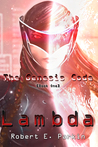 The Genesis Code: Lambda by Robert E. Parkin
My rating: 4 of 5 stars
The Genesis Code: Lambda by Robert E. Parkin
This is an interesting book and goes on my list of books to love to hate. I think that the plot, the characters, and the whole premise of the book are okay and for the most part done well. What I had a problem with is the first one third of the novel. I am giving this high marks for being entertaining and another of those reads that got me from front to back on one sitting, but I had to slog past the first part; which was a shame considering that that part could have been just as well written as the rest.
The story begins with Zack getting up to start a normal day and meeting up with a friend,David, where they begin a bit of world building and it all goes well for a while. Until some distractions in the writing show up.
One of the first things that distracted me was that on occasion there would be some rather interesting images created by somewhat creative usages or combinations of words, but then there were the jarring ones that had the word 'to' where I would normally see 'at' or 'with' where I would see 'by' and other similar substitutions of words. On several occasions there were modifiers in the speach attributes that seemed unnecessary, but that might just be me and a person needs to read this to get the sense of it. There are a few words like 'no' where it should be 'now' and other words that seem to be totally missing in sentences. But what really drew my attention was the frequent use of the word 'just'. There is even one paragraph with four sentences that have 'just' four times; once in each sentence. And in most cases the adjective or adverb wasn't necessary if a more striking word were found for the one modified. Once again most of these are things that a reader must encounter to determine how they might affect the reading. Overall I think this could use one more edit.
Once I got past that one third mark the overall writing improved and the story became much more interesting so I took less note of all the just's.
An interesting style choice in this novel is to withold information as the story moves forward and then feed tiny hints here and there. This works for the most part, but becomes massively annoying when it appears that most of the major characters have a backstory that is dripped out this same way. There are few if any who don't have some hidden past which eventually adds to the confusion of mysteries that run rampant through the whole novel.
There are at least two instances I had to look back, because I was confused about some image or memory brought in at an earlier moment. The reader really needs to pay close attention to details, especially when they seem to be memories or hints at some dark secret.
There is also the initial separation of reality from the virtual and certain indicators that sometimes intrude into both and the reader has to pay close attention to know when something is reserved for reality and something for the virtual and those things that seem to exist in both.
The novel as a whole is like a blend of William Gibson and some super hero comics. In some instances the players have access to a slight inventory of weaponry similar to game avatars and many of these seem to cross the boundaries of reality and the virtual.
At some point the reader is introduced to the group of 12 whose names are such that the story begins to take on a bit of an alegorical bent, which doesn't quite get developed beyond a short peek into it.
It might be safe to say that this novel is about the growth and development of the Lambda character. It brings a lot of thought provoking notions into the development of an AI and when it becomes aware or sentient and sapient and has an interesting way of demonstrating the process to the reader over time.
This is good SFF for those looking for a good fun read that offers a bit more in some insight and deeper thought along the way.
Don't look for all the answers to all the questions because there are 'just' a few things that seem to be meant to extend into the next book. And I hope Robert E. Parkin is working on that novel.
J.L. Dobias
View all my reviews
 Fear the Sky by Stephen Moss
My rating: 4 of 5 stars
Fear The Sky(The Fear Saga Book1)by Stephen Moss
I looked into this novel by way of someones recommendation that it was unique hard science fiction debut novel of a higher caliber than many of those out there today. I can't say I didn't enjoy it because I did and though I struggled to get through it in one night, I almost pulled it off. It is well written and I give it high marks for keeping me entertained, but for that I have to be honest and dispute a few of the notions someone else had when the recommended it to me.
This novel is a great novel for those who like their Science Fiction heavily dominated by the Science. I'm not absolutely certain that it is hard, while in many areas it clearly seems like magic. But the science is also dominated by some procedural elements that give it that firmer feel like one might get from a David Weber novel. What I mean by that is we get the length descriptions of the hardware being used and mix in a bit of the science with that and then we get a few quick action scenes where some of the science gets used.
This novel is also pretty heavy into the political end of things and also the familiar intricate suspense building of espionage similar to the Honor Harrington novels.
What the book might lack is a firm development of characters. There is character development but between the dominant science and politics and the large cast, the development of characters suffers a bit. I love great charactorization in my novels and missed out a bit on that in the wide spread nature of this novel.
The plot itself seemed to take a blend of Battlestar Galactica and it's old and new cast of evil to mix a robot with human outer skin much like what is seen in the first Terminator movie. From there it's the old invasion trope with a slight twist in that the aliens want the Earth intact with absolutely no human life remaining. To do that they need to be sure that all nuclear war material is neutralized, which accounts for the Android like advance force they send. The setup for invasion and the long logical discovery of that invasion dominate a large portion of the novel and almost drag it down and it doesn't really take off until the investigators are absolutely certain that they are witnessing the beginning of a potential invasion. The upside to this is that that portion of the novel sets the characters of the two main characters I found the most intriguing.
So if you like those heavily dominant Science and Political scenarios with the espionage to keep you on the edge of your seat and some few examples of how devastating the gap is between the struggling Humans and the aliens, to the tune of a heartless machine against flesh, then this is the book for you. There are at least a couple characters that you might find that you sympathize with though if you're like me you might be disappointed that there is little time left to examine them closely.
Good read for SFF fans who love the procedural science and tech dominated fiction.
J.L. Dobias
View all my reviews
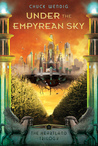 Under the Empyrean Sky by Chuck Wendig
My rating: 5 of 5 stars
Under the Empyrean Sky(The Heartland Trilogy Book 1) by Chuck Wendig
This is one of those books I might not just pick up and check out; so I admittedly have gotten this through the Kindle Unlimited program and downloaded it to check it out; though it was in the wishlist.
THE CORN REACHES for the land-boat above it, but the corn is slow and the cat-maran is fast. The stretching, yearning stalks hiss against the boat’s bottom, making a white noise that sounds like pollen coming out of a piss-blizzard.
Wendig, Chuck (2013-07-30). Under the Empyrean Sky (The Heartland Trilogy Book 1) (Kindle Locations 61-63). Skyscape. Kindle Edition.
Now the above is probably why I put this in the wish list and didn't just buy it and start reading. Don't get me wrong-this is great imagery; it's just when it gets to piss-blizzard and I wandered off to try to find out what a piss-blizzard might be that it lost me back then.
This time I read through and--guess what--within context of the story there is a definition for piss-blizzard.
I think originally I felt like I'd stepped into a Ken Kesey novel or maybe something like a Richard Farina novel maybe some wierd spinoff of Been Down So Long Looks Like Up To Me. But then there are these blizzards caused by the pollen from the corn and they get pretty violent up your nose kind of yellow fog blizzard that are called piss-blizzard so that makes more sense than thinking Richard Farina has started to write science fiction Dystopia.
This is no ordinary corn this super corn engineered to be prolific and meant to be used in all sorts of applications from fuel to feed. But there is some bit of foreboding here when there is talk of the blight afflicting humans and how it slowly takes over the body until it squeezes the life out of the people. Better to take them out and burn them before everyone else is infected. But is there more to it than that and could this be tied to the use of corn for beer and alcohol and perhaps even linked to Cael's fathers rather simple warning that it's best not to imbibe in too many or anything that is made with the corn.
In the above quote the whole begining of the novel sounds like quite good imagery with corn reaching and yearning. And since I had stopped there once; it stayed that way in my mind for quite some time, but I soon found that this was more literal than literary. This corn seems to have a life of its own and if you get left out there too long and start napping you could easily become just that much more fodder for its purpose. This corn is worse than crabgrass as it reaches out takes hold and moves into the surrounding area choking out everything.
Life on the ground is structured around the control and harvesting of this corn. The villages of people who live amongst the corn receive some token support and reward in the harvesting of the corn, though I was a bit confused about what they actually have to do with that harvest since the corn seemed to be harvested by automated machinery. And when that machinery breaks down the villagers don't so much repair it as scavenge from it. So quite basically as the villagers have a transient vagrant sector that scavenge off of them they scavenge off the machinery of the Empyreans who live in the sky. So is it any wonder they are treated often like rats and just barely tolerated.
The Corn and the society seem to be threads of a plot that might run throughout the series where the central plot of this novel might be the lives of some of the people in the villages amongst the corn. In a way its all about the lives of the 'children of the corn'[my name for them-not the author's]. And that moniker might be quite appropriate to where the plot begins to guide me as a reader into the near horror in the story.
If I have a niggle in this novel it might be how it seems to take society backwards or maybe sidling depending on how one views our society today. Of course this is fiction so the author may take it any direction he chooses. It just seems to me that there are some opportunities for some strong female characters that get tossed aside for what seems like the usual male dominated tropes. This would be alright if wasn't for the fact that the plot now is driven by this male need to acquire the female. In this instance it is Gwennie who has been the stabilizing influence in Cael's team of scavengers and there is a whole relationship thing between the two that is tragically doomed when the marriage lottery that the village does matches Gwennie with Boyland, who is Cael's arch enemy. And at this point Gwennie's value plummets while the two men begin a slow dance of rivalry.
But this whole society works that way and I soon find that Cael may be on the road to repeating history. There is some potential for another girl, Wanda Mecklin, who is the one who wins Cael as a potential mate; but once again she is cast aside to move the plot forward. And there is Cael's sister Merelda who has potential to be strong and show up that way, but she disappears from the story quickly. So this becomes a male dominated story, which is not so much a problem as an observation. Then there is Proctor Agrasanto from the sky city who is a villain-ness so she has to come off tough; but even so, she constantly seems to want to be somewhere else rather than preforming her duties. So even though the women seem to be an important part of a plot point they also seem to come off as mostly window dressing which tends to weaken the whole plot point for me.
Setting those concerns aside this is still a very well written book that captured my interest enough for me to finish in one sitting. I hope that we see a brighter future for the women in the story toward reaching their potential, but I will be looking toward the next novel to find where the other threads are taking the larger story.
This is strong SFF in a classic sense with some fresh notions and a few of the usual tropes that should keep the average reader entertained for one sustained sitting.
J.L. Dobias
View all my reviews
 Rebel Wing by Tracy Banghart
My rating: 5 of 5 stars
Rebel Wing by Tracy Banghart
I really enjoyed this novel as a tale of growth within the main character. This growth was both external and internal and the full understanding of the character's growth evolves so slowly across the story that it still takes a huge jolt at one point close to the end for them to realize how much they've changed. The story had consistent science and world building throughout and main premise in the story seemed to hinge on one specific element.
Aris loves to fly her wingjet and she expects soon to be promised to her young man Calix. She knows flying is impractical unless she preforms crop dusting or traveling for a living but Calix will be going into the health sector and he understands her need to fly. In their perfect world it could be that way, but they are about to find out their perfect world will be shattered. The day before that revelation Aris receives a visitor who offers her something that sounds exciting and yet impossible while foretelling the coming events that will require enough manpower that many, including Calix, will be inducted into the military.
The Dominion of Atalanta[Aris and Calix's home] is at war with Safaran dominion and they are losing despite their own propaganda to the contrary. There is an intricate political landscape that involves disputes over control of resources and even a few personal conflicts. The majority of the Dominions seem to be caught in the middle but the leader of Atalanta believes that Safaran is after more than just resources and he knows that the first in danger after Atalanta would be Ruslana whose leader is someone he knows well enough that he has to step carefully in order to enlist her help. As it is she can only offer a minimum of support, but that is integral to the rest of the story.
In this world and particularly in Atalanta the women are not allowed to fight in the military, in fact doing so would be a punishable crime. If I as a reader had one niggling with this novel it would be that the reason for this was never made clear. I appreciate that there might be some attempt to parallel our attitudes and emphasize those feelings by making it a crime. And that would explain that some women might dress as men to sneak into the ranks and the notion of the veil that is used to disguise them is quite ingenious. The women who serve may even die but will never be acknowledge. Although there might be parallels in our western culture there seem to be less of those in the east to the tune that woman were acknowledged to have been warriors; so that not all history has been altered to cast those women as men. So it might have been helpful, all around, to demonstrate some solid reasoning for it being a crime or maybe an explanation that, the logic behind it all; defies logic[which might just sound like reality].
The whole notion does add some interesting flavor to the story so as long as every reader might accept the rule as fact without any substantial background it stands very much to enrich the story as Aris has to make her decision, which in this case she makes for all the wrong reasons. But more than that is that Aris undergoes training that she would otherwise never have because of a childhood ailment that left her physically stunted and as it seems to turn out her life in her village managed to continue to keep her stunted. Her training eventually removes some physical affectations she has and makes her a stronger person while we are introduced to the actual character behind all the physical as we watch that character grow.
Aris is deployed as Aristos and has to carefully hide her secret lest she be caught and arrested. She believes she is in this only when and until she is reunited with Calix; while she's being used by others for her outstanding skill at flying. Her journey from being a selfish sheltered young woman to coming face to face with the horror of war and the realization of the part she could play in all of this make this story a very well told and defined tale of coming of age.
This story should appeal to lovers of SFF and Romance and Adventure and certainly all the mid to upper half of the young adult crowd. The complex political atmosphere and relationships between the players keep the reader on their toes and the pay off is well worth the read.
J.L. Dobias
View all my reviews
 The Empress Graves by E.J. Tett
My rating: 5 of 5 stars
The Empress Graves(The Power of Malinas Book 2) by E.J. Tett
When I read the first novel of this series, The Kingdom of Malinas, I didn't have that many of the strict fantasy genre, from which this comes, under my belt. Since then I've been trying to get in a few and now I've returned to the world of Sorrel, Little Cloud, Millicent and others with a bit more understanding. This book is every bit as much as good and readable as the first.
I now have somewhat the ability to compare and I would easily compare this series with that of The Healers of Meligna-series by K.J. Colt. Though there is a certain polished quality behind the Healers that isn't quite here in the The Emperess Graves and Kingdom of Malinas I still found similar depth of world building and great writing style. Though E.J. Tett's characters are well defined and developed they lack a certain dimensionality that I see in other author's work. By this I mean that there where times, such as when someone close to Sorrel is ruthlessly murdered before her eyes, that though she has a somewhat appropriate response in seeking revenge, there is never much time spent with any inner struggle she might have with the loss of someone so close. It's as though she compartmentalizes it while she seeks revenge, but the reader never gets a full sense that that is really what she's doing. It's as though the rush to the plot has no regard for some precious character details and its hard to feel the true impact of the loss of this character.
Admit-ably I had to return to the first book to recall much of what happened previously since it has been a while since I last read that. This is important because the main antagonist--the Empress--is a figure from out of the first novel and it took me a while to realize this. And though this novel might easily stand alone, it is enhanced with some knowledge from the previous novel. It is at the end of the first novel that Millicent makes it clear that there is a power hidden in the Kingdom of Malinas and that that power draws evil.
This novel concerns a quest for that power. On the surface throughout the novel we see Sorrel struggling, but it is hard to tell if she is struggling with her own quest for revenge or if she might be influenced by this power. As we get closer to the end, the power itself is a major turning point and it remained unclear to me whether that power would have a negative influence on Sorrel and though we see her struggle greatly near the end it's not all that clear if its only a struggle with her quest for vengeance or it might be something more tied to this power drawing evil.
The Empress Graves is well paced and keeps the readers attention throughout and for me it was easy to finish in one sitting. As it gets closer to the end the tension mounts and as is with novels of this nature death takes no favorites.
This is good SFF for the young and old and should stand well with those who love the epic fantasies. I would recommend to anyone who hasn't read the first book to read that before reading this one though it's not absolutely mandatory.
J.L. Dobias
View all my reviews
 The Beasts of Upton Puddle by Simon West-Bulford
My rating: 5 of 5 stars
The Beasts of Upton Puddle by Simon West-Bulford
This was a surprising book. I'd picked it up with several others and left it unattended for quite a bit. I was recently going to be reformatting hard drives on two computers and needed something to pass the time while I sat and observed the electronic equivalent of paint drying. I remembered I had this book and thought it would be just the right kind of light reading I needed for this task. I'm glad I finally decided to read this one.
This is the well told tale of a young man who is going through life with the usual adolescent problems for any bright young man with few if any true friends. The story opens with Joe stopping during his weekend delivery of newspapers to take a nap at the edge of the forest[Something he might be less inclined to do if he were reading the news he was delivering]. I know; pretty sedate, but there's a prologue that punched it up for a starter. Joe nods off and dreams a peculiar dream only to be awakened to catch a glimps of what is possibly the Beast of Upton Puddle. This leads to the dicovery of an injured badger, which Joe takes to the vet, as usual; but this time Joe is told the vet is too busy to help him. The vet gives Joe a list of alternate possibilities, which leads to Ms. Merrynether's Elizabethan Mansion where Joe discovers several mythical creatures.[But not before first becoming a delivery boy for Ronny Merrynether; bringing back strange groceries.]
It doesn't take long to discover that Joe has some peculiar talents, some of which may account for his inability to make friends. When Joe meets a tiny saraph, a giant flying eyeball, a narcoleptic kappa, a hiccup-y wyvern and poisonous manticore at the mansion, it's not hard to see why he becomes suspicious of where the beast in the forest may have come from. He also finds Heinrich, a man with a severely burnt face, at the mansion; along with a cluricaun with a drinking problem. Lilly, the cluricaun, is the comic relief; though his mischief borders on dangerous.
The entire group add up to a strange army of misfits. And it doesn't take long for the evil to show up in the form of Mr. Redwar, someone who wants to buy out Ms. Merrynether for undisclosed reasons. But far worse than one wicked man is what might happen if the world where all these wonderful creatures have come from is exposed to the human race and that opens the possibility of war.
Joe doesn't know it yet but he's about to become a pawn in the much larger game that has intimate ties with the prologue.
This novel was just what the doctor ordered for the day and it seems the whole process began to be paced around finishing The Beasts of Upton Puddle.
A well paced action packed, sometimes hilarious, read full of a great variety of characters. this book is a great addition to the reading stack of any YA lover of SFF.
J.L. Dobias
View all my reviews
 Lightwing by Tara K. Harper
My rating: 5 of 5 stars
Lightwing by Tara K. Harper
This is my second read of this old classic. Old now because it's over twenty years and it still reads well. This reminded me of many of my favorite classics from back in the sixties and seventies and many of those are Robert Heinlein books. This one though had the flavor of a Marion Zimmer Bradley and in particular the Color's of Space. The protagonist is female and a somewhat modified human variant.
Kiondili Wae has some considerable Esper talent that will do her well down the road, but she doesn't yet realize how strong her talent is. She's the underdog fighting her way up alone, because her parents were mistakenly blacklisted and then murdered; although the guild called it a regrettable accident. It left her with minor citizenship with fewer privileges than her peers and having to work hard to earn her education. She has little hope of moving rapidly up the ladder to fair employment, but she's not discouraged because she has confidence in her abilities. She just seems to need better focus.
Kiondili has an Esper ability that has been measured lower than actual and she's treading thin ice because if they find out they might become suspicious that she has excelled in her lessons by stripping the answers from other peoples heads. But that becomes a double edge sword when some job recruiters find this out and offer her a job and wave the normal testing fee she would have to pay. The tester is a Ruvian and they are high in Esper abilities and this is one of many aliens the reader will be introduced to.
If I had one quibble with this book it might be that there are almost too many interesting aliens peopling the story. Still Tara Harper does a great job of keeping them sorted for this reader and she gets high marks for that. The science sometimes almost seems a bit inexplicable, but what is of greater interest is that it is consistent science within the story and it seems well thought out though this reader got a bit lost in it sometimes.
When Kiondili reaches her posting at Corson she discovers it won't be an easy fit right from the start with a handful of alien species, some predatory; and the few species she should be comfortable with end up being the worst to deal with. She'll be Dr. Stillman's assistant and the doctor seems quite nice, but manages to put her right in the middle of an ongoing practical joke battle between the doctor and an alien race, the Dhirrnu, who love to engage in practical jokes. But that's just a mild part of her start at the facility since she's already made the acquaintance of an Ixia who would just as easily make her its lunch, as to take her to lunch.
When her higher Esper abilities are discovered Kiondili finds herself accused of stealing ideas from the mind of a human researcher and she undergoes a close examination from a Ruvian who digs deep into her mind to uncover the truth. Though she comes out exonerated she does not come out unscathed and I thought that Tara Harper did a splendid job of describing what could only be understood to be a mind rape and it's affects on Kiondili.
The science of the story though is about this consortium of aliens and humans who are trying to uncover the secrets to faster than light travel and how Kiondili contributes despite all the stumbling blocks thrown before her.
Even after twenty years this is a solidly good read with fine characterization and a story that grips the reader from front to back. It's a must read for lovers of SF and SFF.
J.L. Dobias
View all my reviews
 When Night Falls by Airicka Phoenix
My rating: 4 of 5 stars
When Night Falls(Regeneration Series)by Airicka Phoenix
I like a good science fiction and I can take or leave a horror and even tolerate a romance now and then. So this book seems to be a sort of teasy treat that tries to combine all three and include a bit of suspense. I can give it high marks for entertaining but not the highest. I can't give it 3.5 so I have gone with 4 and will be brutally honest about why its not a 5.
This starts out strong with a spaceship full of the last survivors of a self destructed earth. It reminded me of Poul Anderson's After Doomsday, but within a few pages that comparison fell apart which was a bit of a shame. We move quickly into the romance and angsty romance at that.
It might be the romance that spoiled this, but only because it seemed like a trope here and rather than enhancing the development of the character I felt it hindered. We start out with two couples Scarlett and Hunter; and RolfGray and Kiera. But as it develops we discover that Scarlett and Hunter are not really a couple; though I felt it confusing at first, yet some how clear that Hunter might prefer men over women. The confusion might be deliberate because at first Hunter comes off as the somewhat laid back but still capable of being jealous boyfriend. Later it becomes clearer that he might just dislike Rolf, though his protest seem more in line with not liking Scarlett getting into the middle of what he perceives as a couple; in RolfGray and Kiera. [This might be Rolf Gray but in my edition it always shows as RolfGray]
As the story develops we discover there is a slowly percolating relationship between Scarlett and Rolf. It started from their first meeting as they boarded the ship long ago and grew stronger because of an incident that occurred after they discovered Earth was dead. I will leave it to others to read the novel to discover this. What concerns me is that in part this relationship and the people involved are what drag things down a bit for me. I like a story that has good characterization and this story had potential for that, but I kept feeling it was falling short and in some cases confusing me. By this I mean that though I can understand the fault of the characters having crossed up relationships; I would have like to have seen some evidence of growth or understanding and or growth of understanding. That said; they are young people still so we need to cut a bit of slack and realize that the angst could look just as real as it looks like a trope.
I don't mind tropes as long as they don't drive the story and for a while these do.
This novel lacks any real strong characters. And though we do get introduced to the horror[some zombie-fy-ing virus], we don't get introduced to the real evil until very close to the end; so the novel has to rely on the protagonists and they all come off pretty weak to me. They do have their moments and though Rolf does shine as a leader he often drops the ball. Scarlett could have been an awesome kick evil protagonist if she didn't seem to get so weak at the knee's around Rolf. But the weakest thing was the complicated relationship between Rolf and Kiera, which seemed to exist only for the sole purpose to allow time for Hunter to spout recriminations at Scarlett and for Scarlett to angst over while beating herself up.
The tropes themselves were not as much the problem as the fact that they were necessary to drive some of the plot and develop the characters. And for me as character development they all fell short. I think they could be mentioned, but then would have been better shoved off in the background. Again; for me the angsty love scenes hurt more than helped. The whole whinny Hunter friendship jealousy thing was too far off for me and didn't help though I could see that it adds to the tension. In the same token the clingy needy and sometime sulky nature of Kiera in her relationship, though adding tension, did less to help. When certain points resolve around these characters the nature of Hunter's and Kiera's relationships to Scarlett and Rolf almost make less sense to me, but that could just be me and I think the reader would have to make their own judgement on this. So you should read it and see.
The plot, and there is a plot that drives the story, is another redeeming feature. I was pleasantly pleased with the twists and even comfortable with the ending of this as the first part of a series. The entire novel is written well with only a handful of grammatical problems that shouldn't hamper the average reader's enjoyment. I think with the strong start and the twisty plot this could easily have been a five for me had there been less emphasis on tropes and more on strengthening the characters. As it is I would give it a 3.5 star but in lieu of that it's a 4 that could be a 5.
For readers who like zombie stories that have a plot that doesn't devolve into a gore fest and who like a bit of light Sci Fi in the mix with a dash of romance this should make an easy enjoyable read. If you can get past the tropes or maybe even discover that I'm overreacting to my own perceptions of trope you should read this and let me know.
J.L. Dobias
View all my reviews
 Change of Seasons by Shiva Winters
My rating: 5 of 5 stars
Change of Seasons(The Relics and Remnants)by Shiva Winters
Shiva Winters is master of the long sentence, which is what I love so much about her prose. She is an artist pushing the limits of the craft and sometimes it becomes recognizable by the flaws that creep into the whole mix. Despite those few flaws I can not help reading everything she writes. This novel is a bit less than the two action series that she's done in that it has a more sedate feel to it. It's much the same as her Wandering Steps Across a Starry Sky. They both deal with some somewhat nomadic characters. WSAASS had Gypsies in space and Change of Seasons has its Gypsies in the rough wilderness world of the Relics and Remnants.
This novel has a lot of world building; but it is all carefully ensconced in a bit of an Adventure Romance[putting emphasis on Romance]. There is a bit of steam punk without the Steam and the Victorian feel. There are airships and there are mechanical devices that have been left from an ancient race that lived on this world prior to man's arrival. So its more of a clockwork-punk type of novel without the added feature of vampires and werewolves and fictional characters remade. Well there are some mechanical wolves of a sort and even some mechanical birds with AI's.
The focus of the plot for this story is less the dark drama of the the Salak'patan Series and the Forgotten Children Series[That's not to say it won't get there in the coming future.]; but right now in this first novel the focus is on introducing the Winters family and taking them through the gruesome trail of Romance along with a bit of light adventure. The youngest girls; Talia and Katia; steal the show for me. But the romances are around them, though they have their own special relationship. This is the story of Daniel and Serina and their family and the romance is all on their daughter Sana and a family friend Stephen. But it's also the story of the Ronin and the Winters family and the precarious life they have as being considered the cast-off bits of the empire.
As far as the adventure and intrigue; this time it's more akin to what we read in Dumas and the Three Musketters. There is a lot of court intrigue and even the society of the gypsy like Ronin has a complex structure. Stephen(an outsider) must wend his way into the Ronin so he might court the one he loves while Sana has traveled off to the empire on vacation only to discover that she is courted by a high noble while she knows that her family name will doom any such relationship.
The scope of the book is quite wide as Talia and Katia uncover and restore a multitude of Remnants of the others who used to live on their world. What they are doing will be dangerous and costly but will benefit both the Winters family and the Ronin of whom their mother is one. In this back drop we have such creatures as the mechanical wolves and the birds and floating wagons and replicator machines.
Once again there is no end to Shiva's imagination and the execution is a treat to explore though it has it's rough edges that border on some few errors and style choices that some will love and some will hate. Shiva writes these for her own enjoyment and publishes them with the hope that others will enjoy.
I hope that fans of SFF and Romance and Adventure novels will find as much to enjoy and love about these books as I do and I hope Shiva has a lot of time yet to write many more.
J.L. Dobias
View all my reviews
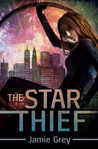 The Star Thief by Jamie Grey
My rating: 4 of 5 stars
The Star Thief (Star Thief Chronicles Book 1) by Jamie Grey
The Star Thief is well written. What I mean by that is that it doesn't present all of the problems with grammar that I've been finding lately in books like this.[Someone else did mention finding some problems but if there are that many there I must have been distracted.] I enjoyed reading it and have given it high marks for that and as usual that means I'll be a bit brutal about the things I had problems with.
The story is quite well paced with enough action to keep the reader's interest. Renna is a thief and seems to style herself a mercenary. We later get a better notion of her start in this life and I'd stay with thief. The Star Thief comes from her having stolen the Seralline Star Sapphire; a feat that apparently no one is supposed to know was her job; though many more people seem to know, than she would expect. The Sapphire is also a bit of a running joke in the story because she still has it and is wearing it and so far only one other person seems to realize that she's wearing it.[Either that or I was very unattentive while reading.]
Being a thief for hire; Renna is hired to pick up some high tech weapon component that has been stolen by the Evil Cordozas. While doing that job she finds human cargo and decides to liberate it setting off a great escape scene. This leads them into the hands of a group of what look like ninja like mercenaries and also to my first quibble. This turns out to be a special group of official or unofficial people meant to police space and they mean to recruit her. They are not very straight forward about their intent and in an attempt to escape Renna kills one of these soldiers.[Which is all fine because the stakes feel high and the threat real so it tracks well... until they recruit her.] When they recruit her I kept waiting for someone to complain that she'd killed (so and so[I don't recall if we are ever told who it was.]) and they won't work with someone who killed him. Instead it just seems to go away and we never hear much about it other than when the man who is hiring her sees the body and frowns and calls it his own miscalculation of her abilities.
It turns out that her saving the young boy from the human cargo container is an added bonus to her job and we will see much more about the boy as the story develops. The boy starts out looking like a plot MacGuffin but has a much larger part in the whole plot. There are some parts predictable at this point in the greater parts of the plot but for me that's not a problem.[Some people might be dissappointed.]
There are at least two places where there is graphic sexual content and so; I would rate this as an Older Young Adult. The Young Adults on the other end of the scale should probably not be reading this. There is something to say for it being a portion of the character development of Renna and there is even a backstory to support it, so in a most liberal sense it seems to be necessary. I can take or leave it and honestly the person across the room from me who reads mostly romance is often put off by this much of this type of description.[So be warned.]
This is a series so there is more to come. That said I was still really surprised with the turn at the end. Definitely worth checking the next novel.
This is a good Sci-Fi Thriller with a bit of dystopia in the mix so fans of both should check it out.
J.L. Dobias
View all my reviews
 Seed Seeker by Pamela Sargent
My rating: 5 of 5 stars
Seed Seeker by Pamela Sargent
Seed Seeker is Pamela Sargent's third book in the Seed Series.The first two set the tone for the series and this one follows through with the same tone capping off the series that is more character driven than innovative.
In the first book the Ship which is both a generation ship and sentient AI, has raised generations of humans with the goal to deliver them to their new home where she would seed the new world. She was doing so in the belief that she was completing the work of some of the finest minds Earth had to offer. Saving mankind by preparing the generations to survive on a potential new and wild world.[The sentience of the ship seems to be minimized throughout the series though the main thread of the moral dilemma is tied to its sentience.]
The story starts with a generation that has some conflicts amongst its members and as they come close to reaching their destination they discover that the ship has had a previous generation in suspension because the first world she stopped at was not suitable. The waking of that generation causes more conflict and sets the stage for strife in the near future when they are all dropped upon the new world. At the same time Ship discovers that the original group that set her on her mission may have been the missfits of Earth rather than the great minds she'd been programed to believe.
In the second book the colony of three disparate groups attempt to survive while ship goes on with her mission to create more generations and continue to seed the universe. The story begins with a few of the original colonist still arround, but centers on the next generation. A generation that might contain some who have some dramatic adaptations to the new world. This sets the stage for the division of those who are affected and those that are not. And the isolation of the ones who believe they are the future of pure man on the new world.
This third book takes up from there in the next generation and also at a time when the generation Ship has been having some doubts about her purpose and some regrets about leaving the first generations on the new planet. As the story opens there is a new light in the sky above the new world and this sets off a pilgrimage to the original settlement to find out if the light might be Ship. There are mixed feelings about the potential arrival of ship because those who have been changed by something on this new planet are fearful that the Ship may reject them as being less than adequate[less than human].
Once again Pamela Sargent creates some interesting and credible characters that come to life in a world of strife, conflict, and misunderstanding. And the leading question in the readers mind might be; how will ship react to this world of savages and how could they possibly fit into her programmed plan.
This is a great Generation Ship series that is both for Young Adults and SFF fans.
J.L. Dobias
View all my reviews
 The Master of Izindi by David Wallace
My rating: 4 of 5 stars
The Master of Izindi by Dave Wallace
My attention was drawn to this by someone who recommended it[on several occasions]as a very good self-published novel. I avoided it for some time, but finally gave it a try and I did enjoy the overall story, but....
This is one more of those love hate novels in my library; and I debated on whether to do any sort of review, because I'm not sure if I can do much justice to the novel itself because of the choices Dave Wallace made in his style of writing. I did like the story and give it high marks for being entertaining; but I can't give it my highest marks, because of a number of obvious flaws in the version that I had available to me. In fact, because I am giving it high marks I once again feel obligated to point to some of the flaws that might annoy other readers more than they managed to put me off.
I tried starting this once and immediately saw that there would be a small problem for me. I love character driven stories that dig in close to the character to reveal their thoughts and motivations; and because this seems to be a third person omniscient point of view with a tendency to stay omniscient and distant, this did not give that particular feel to me. In fact, I was forced to go back and look at One Thousand Nights and a Night to try to determine if it might be that the author was trying to mimic the style of that book. [I'm still not sure even after looking; if he was trying to set that mood, it fell a bit flat; because this book is not suited to the format used in One Thousand Nights and A Night.]
What I mean by that is that One Thousand Nights and A Night is the story of Scheherazade telling stories in such a manner to make them interesting enough that she might waylay her death by keeping the king interested enough to allow her another day to continue the tale.[Each day she was preventing the king from marrying and then slaying another bride.(The king is a serial killer.)] The tale becomes a string of tales within tales[with sometimes even another nested tale] that are all done mostly in a dispassionate nonjudgmental manner with an often curious twist that Scheherazade might leave off at; for the next day. These were also tales that appear to be somewhat moral in nature while often using language and images that some cultures might find somewhat objectionable. The only transferable key within these tales is that it is mostly narrated from a third omnicient point of view. But it might be unfair to stop there; because we should look at the characters who often seems to be blown around by the winds of fate and sometimes striking upon the correct choice and the often heroic figure who might sometimes seem invincible.
But in a way I might be unfair trying to make a comparison, in that Dave Wallace may have just been trying to transfer some Arabian mythical creatures into a modern format. Even so with that in mind I find that one of my first difficulties was that the novel seems to be set into three basic tales that include the same character; but a character who seems to make such startling leaps within his character that it seems like its a story of three different characters. And yet it is all one tale with one character.
In the beginning, Zafir is described many times as a street urchin; and I'm sure somewhere in the defintion of that term he qualifies, but some parts not so much when we find out more about him. And that's part of the problem, which is that we don't know much about him throughout the entire novel. In this first part about the street urchin Zafir we know more about the woman who helps him, Alima, than we do Zafir. Alima is another problem, which is that she helps save him from the Emir's guard and takes him to the edge of the city and pretty much has to give up her way of life in the city because of all that and she ends up being discarded, so that the reader can be moved onto the next part of the story.[Although, I'm not sure how I'd have felt if she'd been killed.]
The next part of the novel Zafir is taken in by Master Storm where he becomes possibly some sort of novice trainee who manages to stumble into the right direction when they are in danger and in need of making decisions on the fly. In this instance the adventures that they encounter on their trek to Izindi do read a lot like the stories out of One Thousand Nights and A Night. Each time we seem to be witness to the strange growth of the novice Zafir with the potential to understanding his underlying 'wisdom' which he often just happens to stumble into.
Somewhere along the line we finally discover that Zafir has a family[I have yet to find the spot since my amazon for pc keeps crashing when I search.] including not only a father and mother, but a sister and brother. It is convenient that we discover this as it becomes an important part of his shifting motivation.
The third and final part is Zafir the Master. He has passed his tests he has proven himself and he has surpassed all his masters and on top of that it might be that he's the chosen one. This part might get a bit sticky for those people who don't care for Deus Ex Machina. For quite a few pages Zafir seems undefeatable and he strangly strings together a bunch of seemingly random, but serial, adventures that lead to his acquiring all the equipment he needs to accomplish his final task.
As it is all of those features in the story did not account for my dropping a point save for the choice to use an omniscient third that was so distant. Despite the cringeworthy notion of deviating from rules: I would have been happier had the author chosen to break the rules a bit and come closer to the main character. This reader would have loved to know how the character felt in each of the steps from the urchin to the master and his thoughts and feelings during the greater part of stress up to and within the climatic moments. And if we were to go with the notion of trying to catch the mood of One Thousand Nights and A Night then I could almost live with the treatment or maybe lack of treatment of the women especially the discarding of the character Alima whom I at some point was holding such hopes for.
Now we reach the part of caveats. I don't downgrade the stars for grammar, but I do feel when the errors reach a specific boundary it's important to mention. The copy I have of this novel contains, at a minimum, 50 gramatical problem. These range from spelling to incorrect words to punctuation and sentences that are confusing at best.
As one Example of the handful or more.
The scimitar rebounded from her neck with a clang and fell notched from the astonished noble’s grasp.
Wallace, Dave (2011-12-12). The Master of Izindi (Kindle Locations 4210-4211). . Kindle Edition.
[I think I understood this but it needs punctuation or the removal of notched because it's confusing]
There are several instances when you is used and should be your along with the switching out of then and than;of for on; so for do;road for rode; past for passed. And sometimes extra words just hanging at the front or end of a sentence[often duplication of words]. There were instances where a character named Samael was referred to as the Samael and though there might be some instances where such wording might become necessary; there was no clear indicator that there was any reason for that.
Somehow:: shows up at least 21 times
Suddenly:: shows up at least 40 times
I don't have an overall aversion to the use of these words but most of the time in this novel they were used to somehow suddenly avoid explaining things.
The application of comming close to stopping the narrative to address the reader with facts that none of the characters would know was likely permissible within the context of the omnicient narrator; yet it was still rather annoying and sometimes not all that necessary.
Years later, no man alive could have approached him thus unnoticed, but as it was, he simply did not hear them.
Wallace, Dave (2011-12-12). The Master of Izindi (Kindle Locations 865-866). . Kindle Edition
[Sometimes the information was important]
Zafir again failed to note the sidelong glance the Abbott gave him upon arriving in the Tower of Stars, and he missed the envy and hate that filled the man’s face.
Wallace, Dave (2011-12-12). The Master of Izindi (Kindle Locations 5125-5126). . Kindle Edition.
There were too many instances of what I would call convenient application of knowledge[discovered by the reader in the moment of application].
“I recognize it from Izindi’s teachings.”
Wallace, Dave (2011-12-12). The Master of Izindi (Kindle Location 5160). . Kindle Edition.
Conversely there were moments when something was so distanced from the reference that I have yet to go back and find the reference.
As Zafir ran off, the Master of Fire stared after him, pondering the Abbott's words.
Wallace, Dave (2011-12-12). The Master of Izindi (Kindle Location 1290). . Kindle Edition.
I do believe that lovers of Arabian tales and mythologies in general should enjoy this book with a warning that some might find a few glitches a bit frustrating. If you are like me, though, you may be prompted into taking a fresh look at A Thousand Nights and A Night.
J.L. Dobias
View all my reviews
